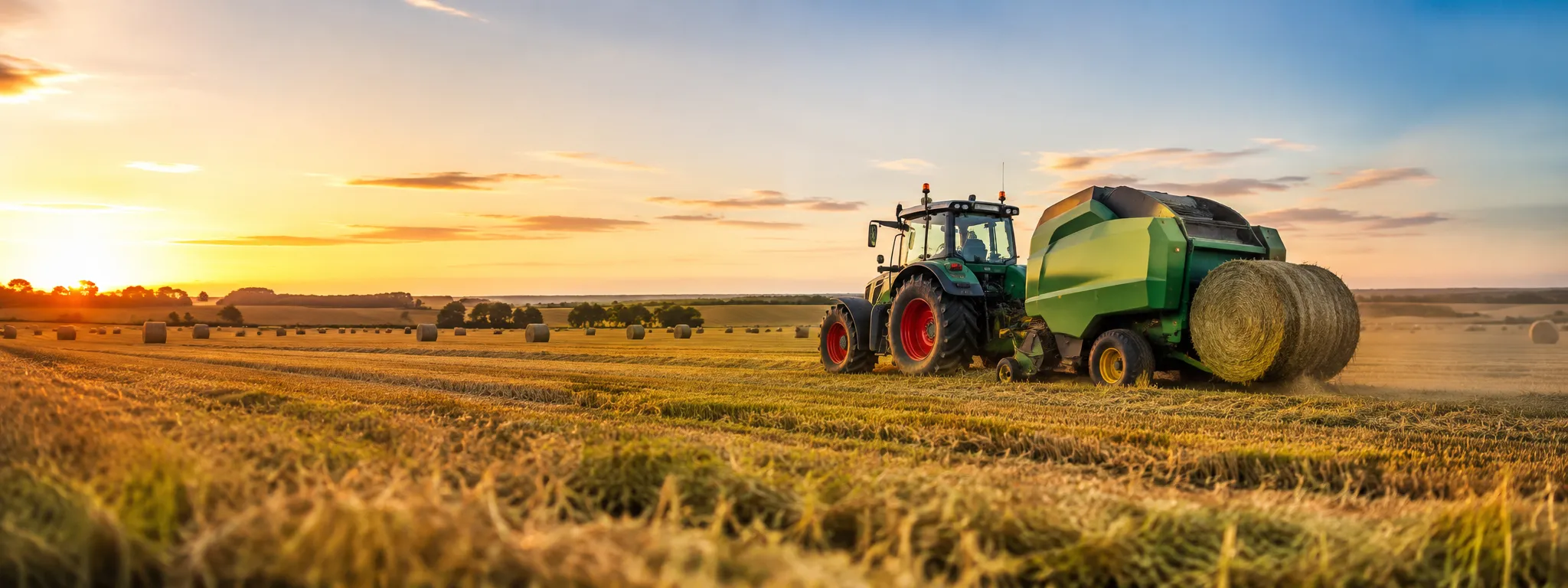
A baler working in a mixed forage field. The terms hay baler and straw baler both describe the same category of machine — what actually matters is the pickup type and the crop it is set up for.
Walk into any agricultural equipment dealer in India and ask for a hay baler and a straw baler and you will likely be shown the same machine twice. That is because the terms hay baler and straw baler are not technical categories — they are marketing descriptions that both refer to the same fundamental machine type: a tractor-mounted implement that gathers, compresses, and binds crop residue or forage into manageable bales for storage and transport.
The confusion causes real problems for buyers. Search for “hay baler for sale” on one platform and “straw baler machine” on another and you will find the same machines priced identically, sometimes by the same supplier, but described as if they are different products. Understanding that these are the same machine category — and that what actually matters is the pickup type, chamber size, and crop-specific configuration — is the starting point for any informed purchase decision.
Hay Baler vs Straw Baler — the Terminology Explained
The distinction between hay and straw is agronomic, not mechanical. Hay is cut green forage — typically grass, alfalfa, clover, or mixed pasture — that is mowed, field-dried, and baled while still carrying significant nutritional value. Straw is the dry crop residue left after the grain harvest — wheat straw, paddy straw, rice straw, and similar materials that have had their grain removed and have little or no nutritional value as livestock feed.
The baling machine itself does not distinguish between hay and straw at the mechanical level. The pickup mechanism gathers material from the ground, the pre-compression mechanism feeds it into the chamber, the ram compresses it into bale shape, and the knotter binds it with twine. This sequence is identical whether the material going through the machine is fresh-cut alfalfa hay or dried paddy straw.
Where the terminology comes from
The hay baler terminology originates in European and North American markets where the primary historical use of baling equipment was for hay production — baling grass and legume forage crops for livestock winter feeding. As baling technology spread to Asia and was adopted for crop residue management, the term straw baler emerged as a localised description for the same machine used on rice straw, paddy straw, and wheat straw. Both terms are now used interchangeably in international markets.
When searching online marketplaces for baling equipment, use both terms in your search — hay baler, straw baler, baling machine, paddy baler. The same machine will appear under all of these terms from different suppliers. Compare specifications, not terminology, when evaluating options.
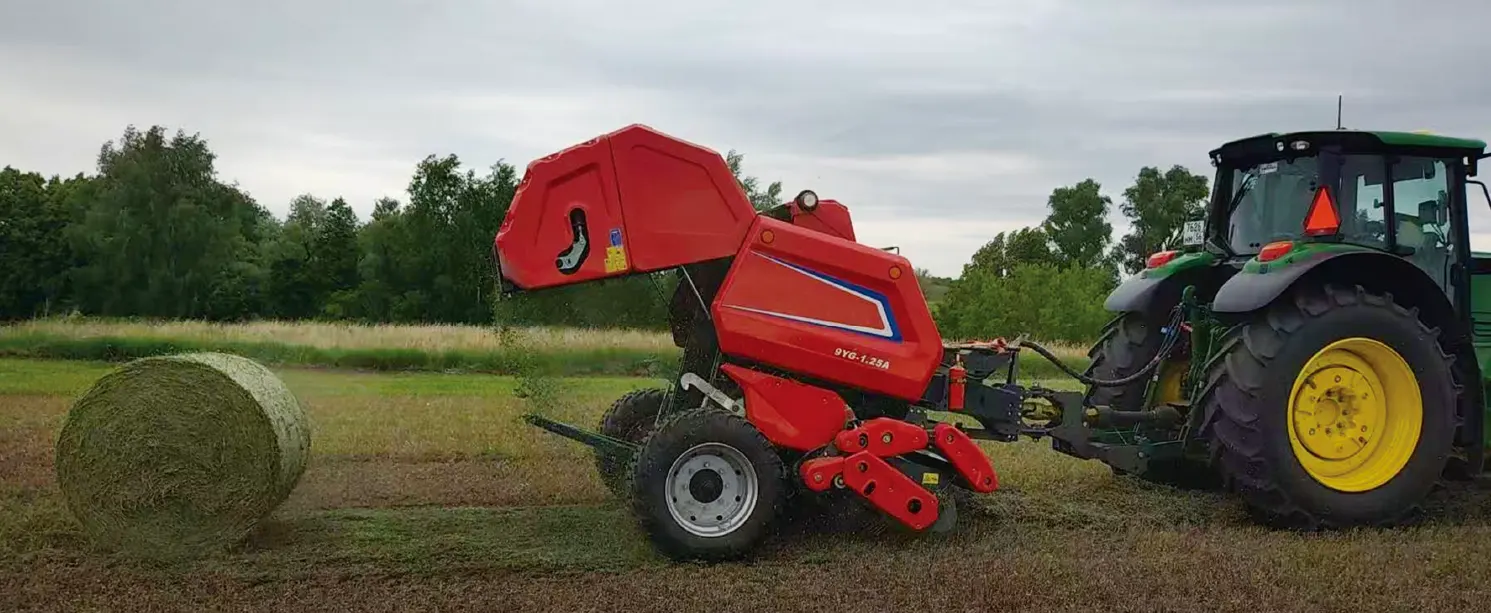
A straw baler (or hay baler — same machine) working in field conditions. The terms describe the same equipment category; what matters is the specific model specifications for your crop.
Same Machine, Different Crops
The three standard 9YF square baler models — the 9YF-1700, 9YF-1900, and 9YF-2200 — are all described as both hay balers and straw balers in different markets because they handle both material types with the same spring-tooth pickup mechanism. The specification sheet is identical regardless of which term a specific market uses to describe the machine.
What the 9YF range handles as a hay baler
- Alfalfa (lucerne) — the most common hay crop in India and Central Asia
- Grass hay — mixed pasture grasses at 15 to 20 percent moisture
- Clover and mixed legume hay
- Sorghum hay and sorghum silage baling (dry form only)
- Oat hay and barley hay
What the 9YF range handles as a straw baler
- Paddy straw (rice straw) — the primary straw crop in India
- Wheat straw — the primary straw crop in Punjab and Haryana
- Soybean stover
- Cotton stalk residue (on flat, windrowed material — standing stalks require the 9YF-2200S)
- Sunflower stalk residue (windrowed)
The only practical difference between using the machine as a hay baler versus a straw baler is the moisture content management requirement. Hay must be baled within a specific moisture window (typically 15 to 22 percent for most hay types) to preserve nutritional value and prevent mould. Straw is typically baled much drier (10 to 18 percent) because it has no nutritional value to preserve and is primarily managed for volume and storage convenience.
What Actually Differs Between Baler Models
The four variables that determine whether a specific baler model is the right choice for your farm have nothing to do with whether it is called a hay baler or a straw baler. They are:
1. Pickup width
The width of the pickup mechanism determines how wide a windrow the machine can gather in a single pass. The 9YF-1700 picks up 1700mm, the 9YF-1900 picks up 1900mm, and the 9YF-2200 picks up 2200mm. Choose the pickup width that matches the windrow width your rake produces for your specific crop.
2. Minimum tractor HP
The power requirement determines which tractors can drive the baler at adequate performance levels. The 9YF-1700 requires 40 HP, the 9YF-1900 and 9YF-2200 require 50 HP, and the 9YF-2200S requires 100 HP. Match the machine to the tractor you have — or the tractor you can reasonably access.
3. Pickup type
Spring-tooth pickups are correct for flat, windrowed material. Hammer-claw pickups are required for standing or lodged stalks. This is the only genuinely technical distinction between machine configurations, and it matters far more than whether the machine is described as a hay baler or a straw baler.
4. Bale chamber size
Larger chambers produce heavier bales per cycle. For hand-stacking operations, smaller bales are easier to handle. For mechanised operations, larger bales reduce total bale count and handling cycles per hectare. Match chamber size to your handling capability.
| Variable | 9YF-1700 | 9YF-1900 | 9YF-2200 |
|---|---|---|---|
| Pickup width | 1700mm | 1900mm | 2200mm |
| Min. tractor HP | 40 HP | 50 HP | 50 HP |
| Pickup type | Spring-tooth | Spring-tooth | Spring-tooth |
| FOB price range | $4,200-5,800 | $5,500-7,200 | $6,800-9,000 |
| Suitable for hay | Yes | Yes | Yes |
| Suitable for straw | Yes | Yes | Yes |
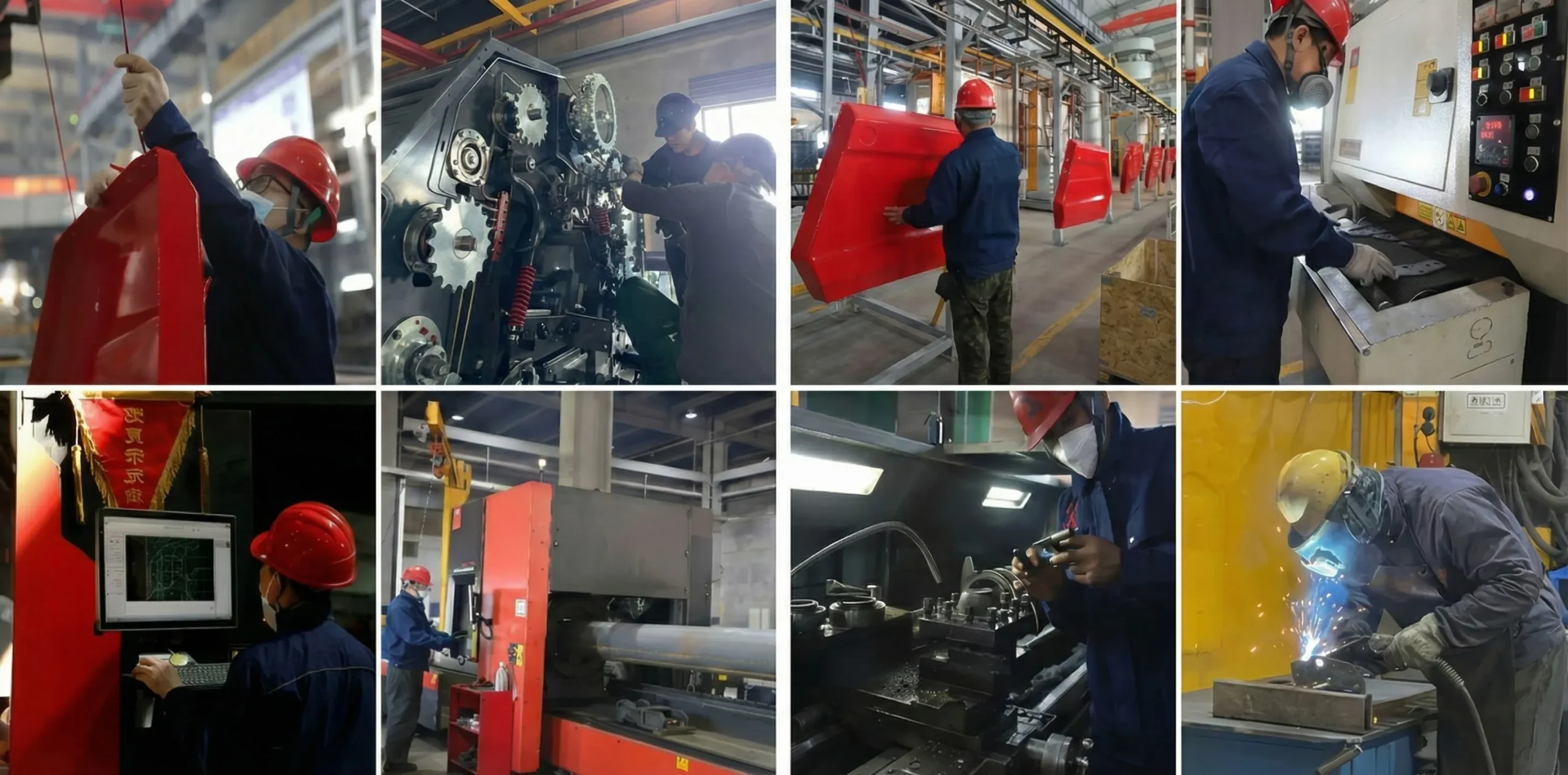
The Ever-Power production facility. Hay balers and straw balers in the 9YF range are produced on the same production line — they are the same machine, described differently by different markets.
Practical Buying Guide by Crop Type
The following recommendations are based on primary crop, not on terminology. Use this as your decision framework when evaluating any baler — regardless of whether it is described as a hay baler, straw baler, or tractor baler by the supplier.
| Primary crop | Recommended model | Key reason |
|---|---|---|
| Paddy straw, under 100 ha | 9YF-1700 | 40 HP compatible, light enough to transport easily |
| Paddy straw, 100-250 ha | 9YF-1900 | 50-100 HP range, best model for mixed tractor fleets |
| Wheat straw, large scale | 9YF-2200 | Widest pickup, lowest passes per hectare |
| Alfalfa hay | 9YF-1900 | Wide HP range allows lower operating speed for leaf preservation |
| Corn stalk baling | 9YF-2200S single-crusher | Hammer-claw pickup — only option for standing stalks |
| Silage wrapping | 9YCM-850 | Integrated wrapper — one-pass oxygen exclusion |
Common Questions from Indian Buyers on Hay Baler vs Straw Baler
These are the questions the Ever-Power sales team answers most frequently when Indian buyers contact us after searching for either hay balers or straw balers online.
Why does the same machine cost different amounts on different platforms?
The same specification machine will appear at different price points across different platforms for two reasons: the seller is at a different position in the distribution chain (manufacturer vs. trader vs. dealer), or the machine appears identical but has different specification levels — different steel grade, different certification status, or different component sourcing. Always compare specifications directly and verify certification before comparing price.
Is a hay baler from Europe better than a straw baler from China?
European-manufactured balers carry premium pricing that reflects European labour and regulatory costs, not necessarily superior component quality for the specific conditions of Indian paddy or wheat straw baling. A well-specified, CE-certified Chinese-manufactured baler with a documented quality management system operates at equivalent field performance for the Indian crops it is designed for. The relevant comparison is certification, specification, and after-sales support infrastructure — not country of manufacture.
For buyers in India who want a baling machine that is both internationally certified and supported locally, the key criteria are CE certification with a verifiable certificate number, ISO 9001 certification, spare parts availability in India or with short air-freight lead time, and references from operations in similar crop conditions. Contact our team to discuss which criteria apply to your specific operation.
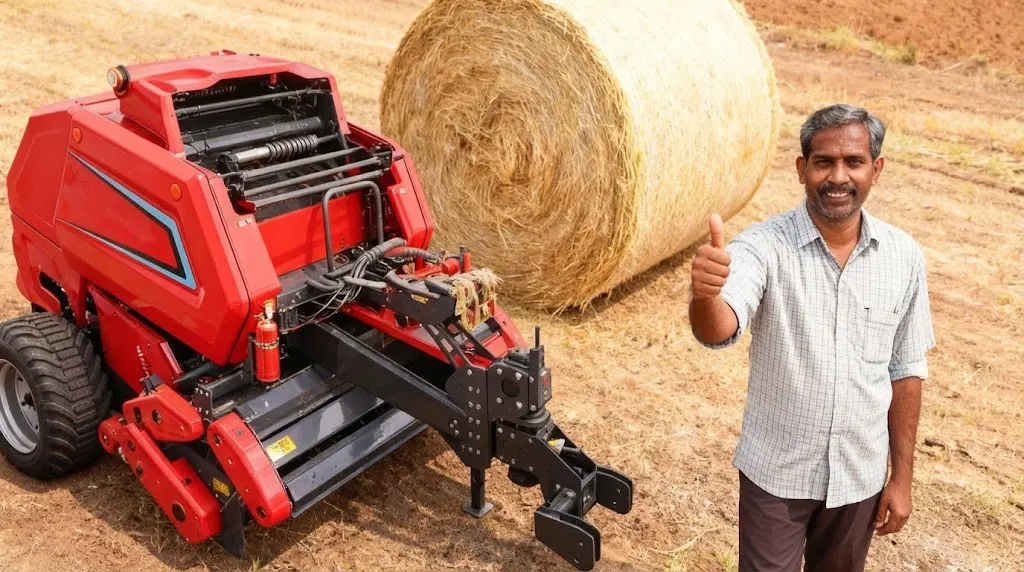
A baler in field operation. Whether called a hay baler or straw baler by your local dealer, the machine specification and manufacturer support capability are what determine real-world performance.
- Straw Baler Machine Price Guide 2026 — complete FOB price reference for all models
- Square Baler for Paddy and Wheat Straw — crop-specific model matching guide
- How to Choose a Baling Machine Manufacturer — 7 questions to ask first
- 9YF-1900 Mid-Size Square Baler — the most versatile model for Indian farms
- 9YF-2200 Large Square Baler — widest pickup, highest seasonal output
Frequently Asked Questions
Is a hay baler and a straw baler the same machine?
Yes. Hay baler and straw baler both refer to the same category of machine — a tractor-mounted implement that gathers, compresses, and binds crop material into bales. The distinction is in the material being baled (hay is cut green forage, straw is dry crop residue) not in the machine itself. The same 9YF series square baler handles both hay crops (alfalfa, grass) and straw crops (paddy straw, wheat straw) without modification.
What should I look for when buying a hay baler for sale in India?
Focus on four specifications: pickup width (match to your windrow width), minimum tractor HP (match to your tractor), pickup type (spring-tooth for flat material, hammer-claw only for standing stalks), and certification status (CE and ISO certification for international quality standard). Price is secondary to these four variables — a cheaper machine with the wrong pickup type or incorrect HP rating will cost more in downtime and repairs than the initial savings.
Can I use the same baler for both paddy straw and alfalfa hay on the same farm?
Yes. The 9YF-1900 and 9YF-2200 are routinely used for both paddy straw and alfalfa hay baling on mixed farms without modification. The main adjustment between crops is the pickup height setting (typically lower for alfalfa which lies flat, higher for paddy straw on uneven terrain) and the bale density tension setting (lower for leafy alfalfa to reduce leaf shatter, higher for dense paddy straw). Both adjustments take less than 10 minutes at the start of each crop.
Why do some suppliers list the same machine as both a hay baler and a straw baler?
Because both terms describe the same machine category and the same suppliers serve both hay-producing markets (Central Asia, Middle East, Australia) and straw-producing markets (India, Southeast Asia). Using both terms in product listings is a search optimization choice, not a description of two different products.
Is it worth buying a separate hay baler machine for alfalfa and a straw baler for paddy?
Not for most farm operations in India. The 9YF-1900 handles both alfalfa and paddy straw well enough that operating two separate machines would not justify the additional capital cost except at very large commercial scale (over 1,000 hectares per season) where maximising each machine’s specialisation produces a measurable throughput benefit. For the majority of Indian mixed farms, one well-specified mid-size square baler serves both crop types effectively.
Is there a government subsidy in India for hay balers and straw balers?
The SMAM scheme applies to CE-certified agricultural machinery without distinguishing between whether the machine is described as a hay baler or straw baler — the eligible category is the machine type, not the marketing term used to describe it. All Ever-Power 9YF models carry CE and ISO certification and are eligible for subsidy consideration under SMAM. Contact your local Krishi Vigyan Kendra for current subsidy rates and application procedures in your state.
Tell us your tractor HP, primary crop, and approximate seasonal bale volume. We send a matched model recommendation and factory-direct price — no sales pressure, no intermediary margin.