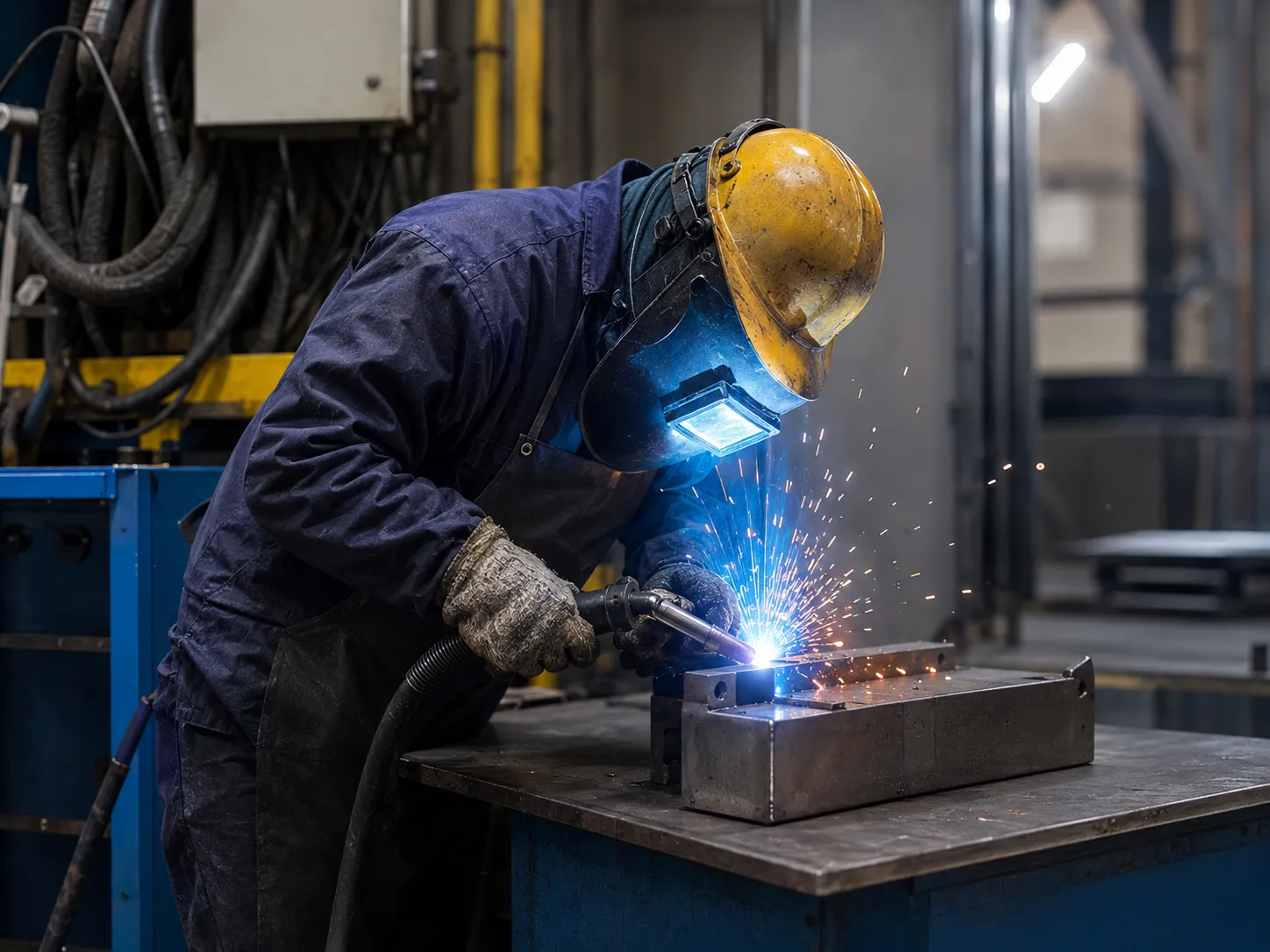
Active welding on baler frames at the Ever-Power factory. A genuine baling machine manufacturer will show you this on a live video call before you place any order.
- Why the manufacturer matters as much as the machine
- Question 1: Annual production capacity
- Question 2: Certifications
- Question 3: Government subsidy catalog
- Question 4: Spare parts policy
- Question 5: Warranty terms
- Question 6: Video factory inspection
- Question 7: References from your region
- Red flags to watch for
- FAQ
Choosing the wrong baling machine manufacturer costs far more than the difference in machine price. A baler that cannot be serviced in the field, whose spare parts arrive weeks late during harvest season, or whose certification documents turn out to be fraudulent at customs — these are not hypothetical risks. They are documented outcomes that buyers in India, Southeast Asia, and Africa encounter every season when purchasing from unverified suppliers through online platforms.
The seven questions in this guide are not bureaucratic formalities. Each one targets a specific risk that separates a manufacturer capable of supporting your operation over a 15-year machine lifespan from one that will be unreachable within two years of your purchase. Answer all seven before placing a deposit on any baling machine.
Why the Manufacturer Matters as Much as the Machine
In the agricultural equipment market, particularly for machinery imported from China or India into Southeast Asia, Africa, and other developing markets, the distinction between a genuine manufacturer and a trading company is commercially critical. Both types of entities present themselves identically on online platforms. Both can show you glossy product photos. Both will quote FOB prices and claim CE certification.
The difference becomes apparent when something goes wrong. A genuine manufacturer has engineers who designed the knotter mechanism, technicians who can diagnose a drive chain tension issue remotely, and a spare parts inventory that can ship a critical component within 48 hours. A trading company has a phone number that may or may not still work in three years.
Ask any supplier to join a 30-minute live video call and walk you through their production floor. Show you the welding station, the CNC bending line, the assembly area, and the pre-shipment testing bay. A genuine manufacturer does this within 24 hours of the request. A trading company will delay, reschedule, show you a static showroom, or decline entirely.
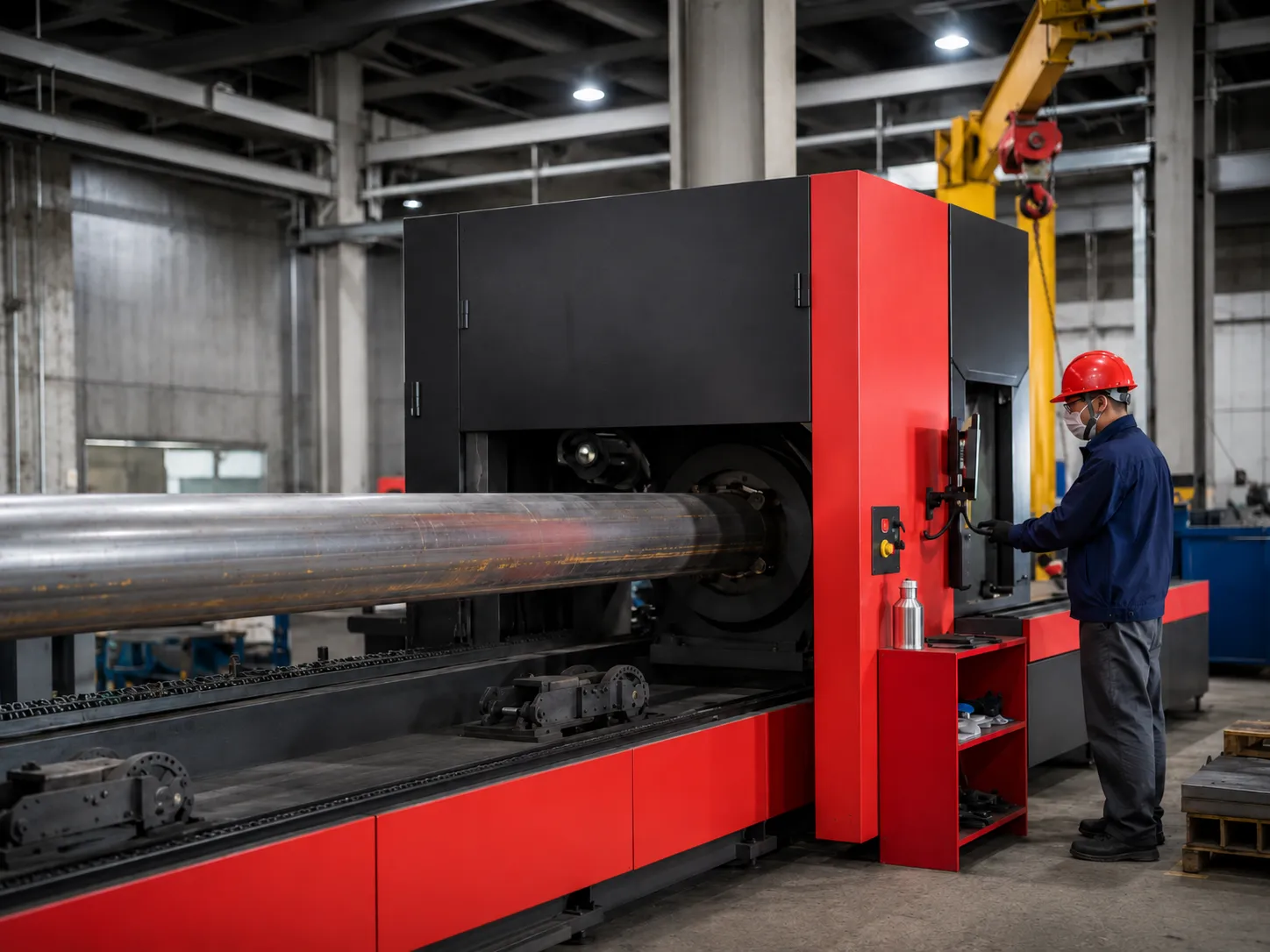
The CNC laser cutting line at the Ever-Power factory. Seeing this on a live video call — not in a photograph — is the single most reliable way to verify a genuine baling machine manufacturer before purchase.
Question 1: What Is Your Annual Production Capacity for This Model?
Annual production capacity is not just a bragging number — it is a proxy for the manufacturer’s commitment to that specific product line. A factory producing 2,000 units per year of a given baler model has optimised the production line, has a standing spare parts inventory, and has engineering documentation for every variant. A factory that produces 50 to 100 units of that same model on a made-to-order basis has none of these advantages.
Ask specifically about the model you are purchasing, not the factory’s total output. A large factory with 300 employees may produce 2,000 units per year — of a completely different product category, with the baler as a side order. What you want to know is whether the machine you are buying is a core product with a dedicated production line, or an occasional order that gets assembled when someone asks.
A manufacturer with genuine commitment to the product line will quote an annual capacity of at least several hundred units for the specific model, describe the dedicated production line, and reference the current production schedule or lead time without hesitation. Vague answers about total factory capacity are a warning sign.
Question 2: Which Certifications Do Your Machines Hold?
CE certification (the European conformity mark required for sale in EU markets) and ISO 9001 quality management system certification are the two most relevant certifications for agricultural baling machinery purchased by international buyers. Both require documented testing, design review, third-party audit, and annual renewal. Both have verifiable certificate numbers that can be checked against the issuing certification body’s database.
Request the actual certificate documents — not a logo on a webpage or brochure. The certificate should show the exact model or product range it covers, the certificate number, the issue date, the expiry date, and the name of the certification body. Check the certificate number against the issuing body’s online verification tool. This takes less than five minutes and immediately separates genuine certification from fraudulent or expired marks.
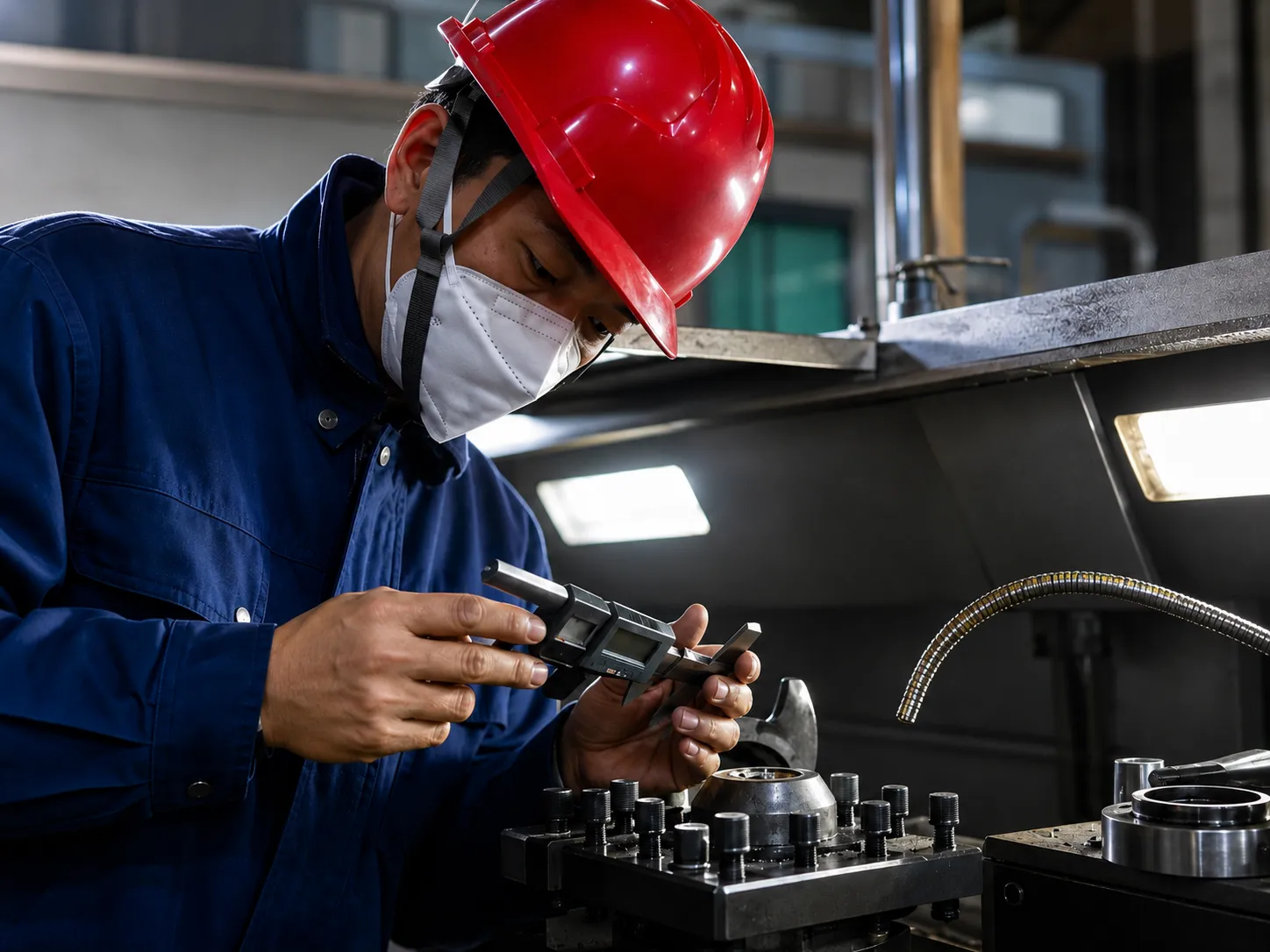
Pre-shipment quality inspection at the Ever-Power factory. Every machine is inspected before shipping and the inspection report is included with the CE and ISO certification documentation.
For buyers in India seeking SMAM government subsidies on baling machinery, CE certification is a prerequisite for subsidy eligibility consideration in most states. Always verify certification before applying for subsidy — a machine with fraudulent or expired CE marks will be disqualified from the scheme and you will have purchased an ineligible machine.
Question 3: Are Your Products Listed in the Government Subsidy Catalog?
For buyers in India, this question is specific and financially significant. The SMAM scheme maintains an approved machinery catalog — machines that have been tested and certified by government-recognised test centres (typically CMERI, CIAE, or state agricultural engineering institutes). Machines on this catalog are eligible for 25 to 50 percent subsidy depending on applicant category.
Not all CE-certified machines are on the SMAM catalog, and not all SMAM-listed machines carry genuine CE certification. The two schemes have different requirements and the intersection — machines that qualify for both — is where Indian buyers get the best combination of international quality standards and domestic subsidy access.
A manufacturer that regularly supplies Indian buyers will know their subsidy catalog status immediately. If the salesperson does not know and has to check, that is informative but not necessarily disqualifying. If they return with a vague answer or ask you to handle the certification yourself, treat this as a warning sign.
Question 4: What Is Your Spare Parts Policy and Lead Time?
Spare parts availability is the most consequential factor in the total lifetime cost of any agricultural machine. A machine that breaks down during harvest season and requires 6 to 8 weeks to receive a spare part will cost you more in lost income than the machine itself cost to purchase. This is not an exaggeration — it is a documented outcome that happens every season to buyers who did not ask this question.
What to ask about spare parts
- Which components are the highest-wear items on this model? (knotters, pickup tines, chain links, drive belts)
- Do you hold inventory of these components, or are they made to order?
- What is your standard lead time for shipping spare parts to India?
- Do you have a distributor or spare parts depot in India?
- Can I purchase a preventive maintenance kit at the time of machine purchase?
A manufacturer who cannot answer these questions about their own product is not one you want supplying a machine that needs to run every day during harvest season. The right answer is specific inventory quantities, clear lead times, and a recommendation for which components you should stock locally from day one.
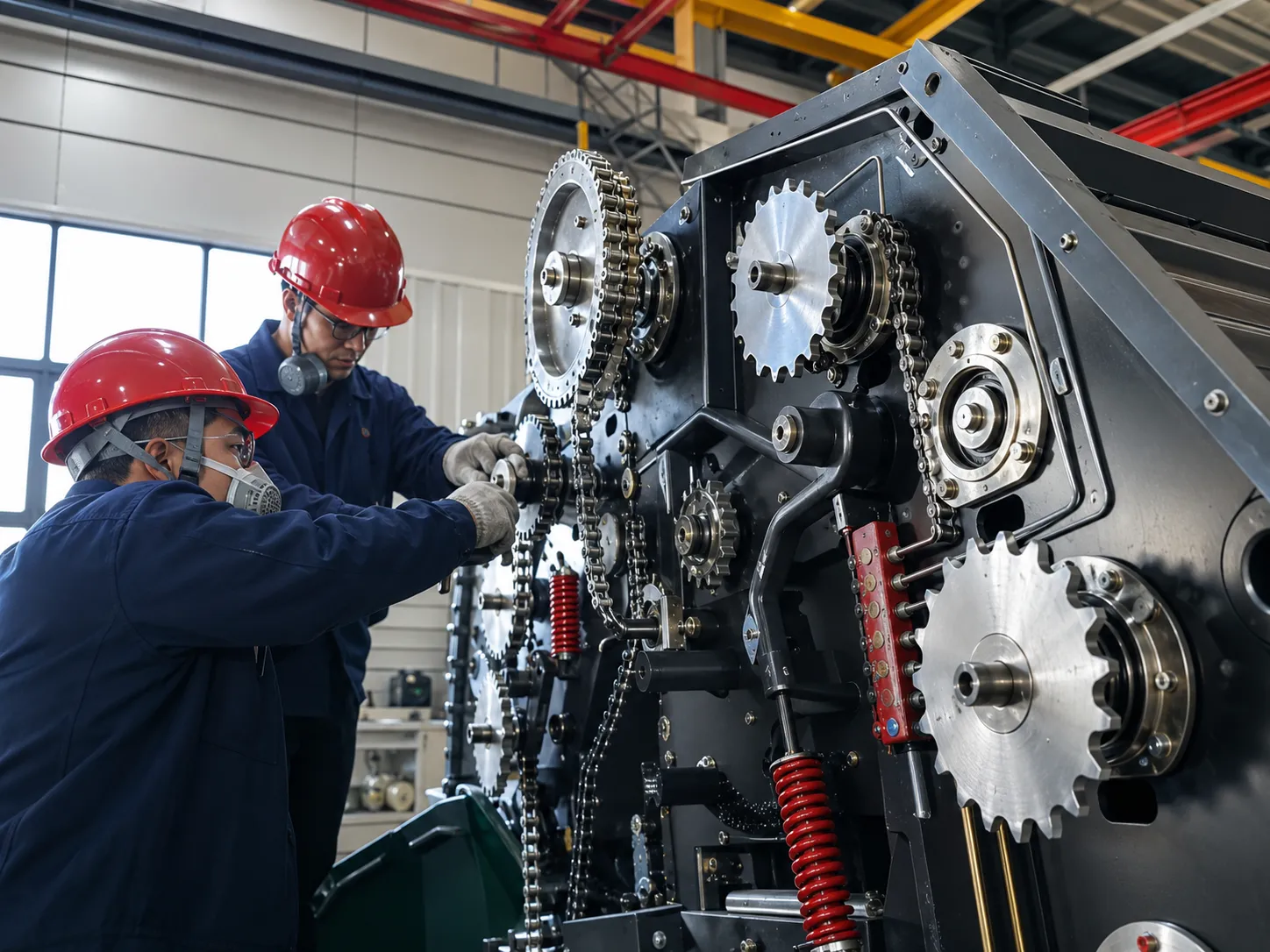
Chain drive assembly line at the factory. The 20A heavy-duty chain is one of the highest-wear components on large round balers — confirm stock availability and lead time before purchasing.
Question 5: What Is Your Warranty Period and What Does It Cover?
The industry standard warranty for agricultural baling machinery from reputable manufacturers is 12 months covering manufacturing defects. What matters is not the headline period — it is what the warranty actually covers, who pays freight for warranty replacements, and whether the manufacturer has the infrastructure to honour a warranty claim 18 months after sale when the machine is operating on a farm in Punjab and the manufacturer is based in Inner Mongolia.
Warranty questions that reveal the manufacturer’s commitment
- Does the warranty cover parts only, or does it cover labour cost for repairs?
- If a component fails under warranty, who pays for the return freight of the defective part?
- Does the warranty apply to wear items such as pickup tines and knotters?
- How do I initiate a warranty claim — by email, phone, or through a local distributor?
- What is your average response time to warranty claims?
A warranty that covers parts but not labour or freight is almost no warranty at all for international buyers. The cost of shipping a defective component back to China and waiting for a replacement exceeds the value of most wear items. Look for manufacturers who have a local presence or who commit to air-freight warranty replacements within a defined timeframe.
Question 6: Can I Inspect Production via Video Call Before Payment?
This is the most powerful verification tool available to international buyers and it costs nothing. Request a live, unscripted video call tour of the manufacturing facility before placing any deposit. Walk through the following areas:
- The raw material storage area (steel coil, chain, hydraulic components)
- The CNC laser cutting or punching line where frame components are cut
- The welding stations where frames are assembled
- The surface treatment line (shot blasting and electrostatic coating)
- The component assembly area where knotters, pickups, and hydraulics are fitted
- The final inspection and pre-shipment testing area
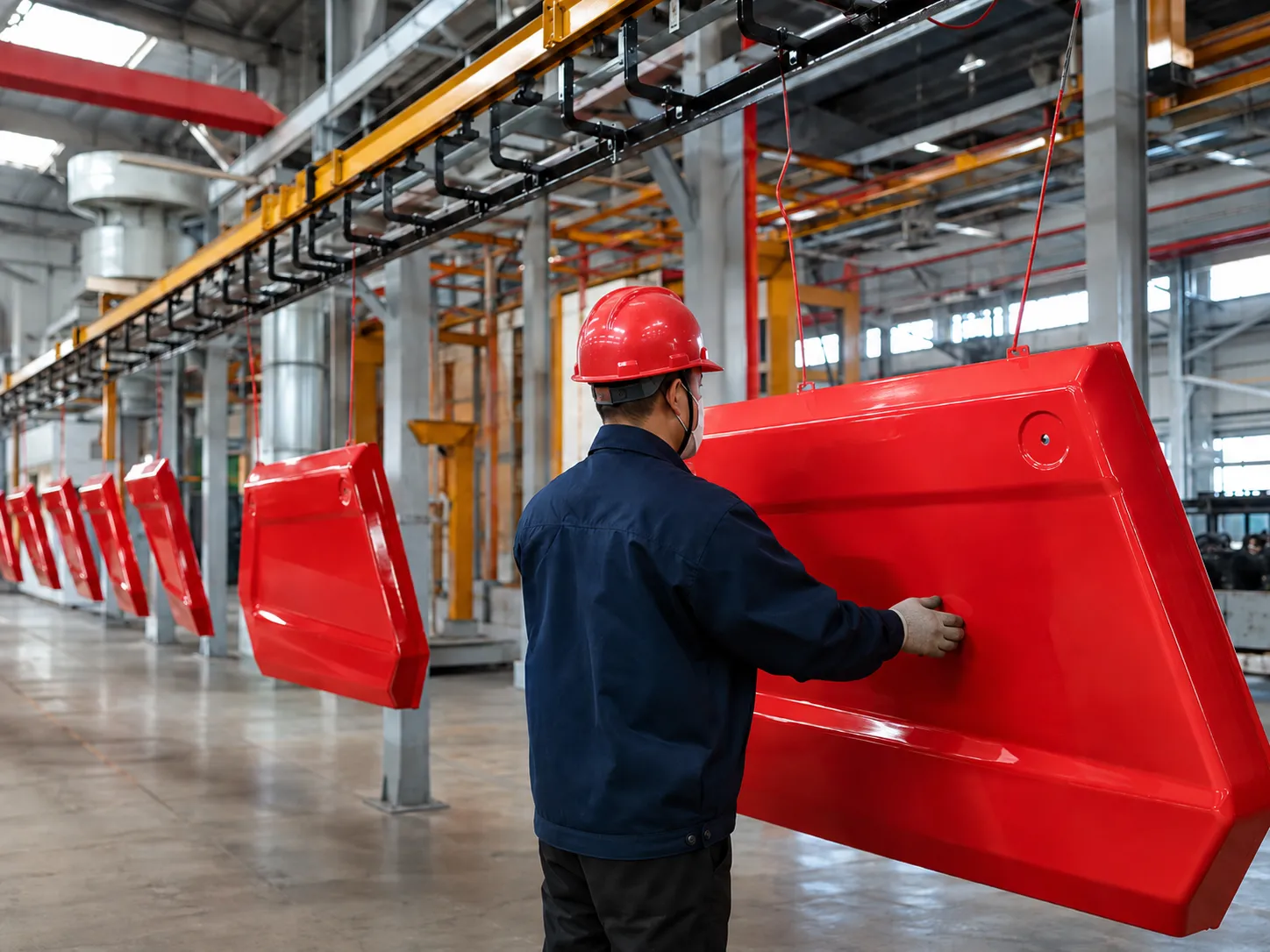
The electrostatic coating line. This is one of the key areas to verify during a live video factory inspection — the quality of the surface treatment directly determines how the machine weathers field conditions over 10 to 15 seasons.
If the supplier shows you a static factory tour video rather than a live call, decline it. Pre-recorded videos can show any factory in any country. The distinguishing factor of a live call is that you can direct the camera to specific areas, ask questions about equipment you see, and verify that production is actually happening on the day you call. Request the call at a time that corresponds to the factory’s production hours — not after hours when the facility is empty.
Question 7: Can You Provide References from Buyers in My Region?
For Indian buyers, a reference from a farmer or distributor in Punjab, Haryana, Maharashtra, or another paddy or wheat-growing state who has been operating the same machine for at least one full season is worth more than any certification document or brochure. Ask for name, region, contact details, and the model and year of purchase.
For international buyers outside India, a reference from an operation in a similar climate zone and crop type is the relevant standard. A reference from a Mongolian livestock operation that runs a large round baler on grassland is not particularly informative for a paddy straw baling operation in Tamil Nadu.
Red Flags to Watch for When Sourcing Online
The following signals, individually or in combination, indicate a trading company, fraudulent certification, or a supplier with inadequate after-sales capability.
- Prices significantly below the market range for the same specification (more than 25 percent below comparable CE-certified machines)
- Inability to provide CE certificate numbers for verification
- Refusal to arrange a live video factory inspection
- No local distributor, spare parts depot, or service representative in India
- Warranty documentation that excludes all wear items
- Sales response comes from a generic Gmail or Yahoo address rather than a company domain
- Product photos that appear to be identical to another brand’s machines with different decals
- Lead times that change significantly after deposit is paid
Buy directly from the manufacturer with payment terms that include a pre-shipment inspection clause. Standard terms for verified manufacturers include 30 percent deposit on order confirmation and 70 percent against shipping documents including the inspection report. Never pay 100 percent upfront to a supplier you have not verified through a live factory visit or third-party inspection agency.
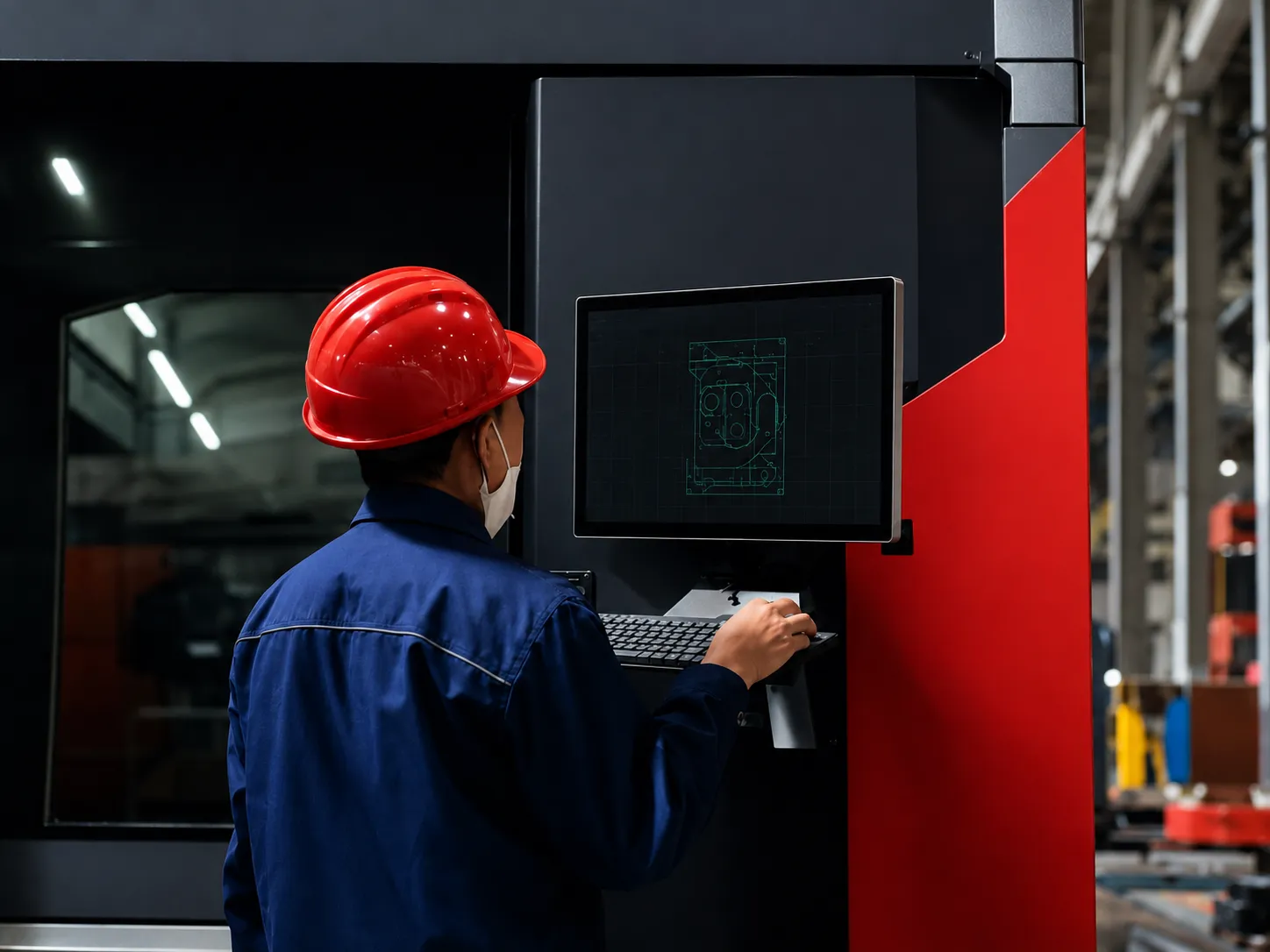
The CAD design and control system at the Ever-Power engineering centre. Engineering documentation capability is one of the indicators that separates a genuine manufacturer from an assembly operation.
- Straw Baler Machine Price Guide 2026 — FOB prices across all models and pickup widths
- Square Baler for Paddy and Wheat Straw — matching model to tractor and crop
- 9YF-1900 Mid-Size Square Baler — full specifications
- 9YF-2200 Large Square Baler — full specifications
- Contact Us — request a live factory video call and factory-direct quote
Frequently Asked Questions
How do I verify that a baling machine manufacturer’s CE certification is genuine?
Request the full CE certificate document — not a logo image. The certificate must show the product range it covers, the certificate number, issue date, expiry date, and the name of the certification body. Take the certificate number and search it on the issuing body’s online verification portal. Common certification bodies for agricultural machinery include SGS, TUV, and Bureau Veritas — all have public verification tools.
What is the difference between a baler manufacturer and a trading company?
A manufacturer designs, fabricates, and tests the machines in their own facility. They employ engineers, own CNC machinery, welding equipment, and surface treatment lines, and hold the technical documentation for every product. A trading company purchases machines from manufacturers and resells them under their own branding. Trading companies cannot provide genuine engineering support, may not honour warranties after sale, and often do not stock spare parts.
How long should I expect as a delivery lead time for a baling machine from India?
For standard models in production, Ever-Power’s lead time is 15 to 30 days from order confirmation to factory-ready. Sea freight from the factory to most Indian ports takes 7 to 14 days. Total lead time from order to farm delivery is typically 25 to 45 days for standard models. Customised configurations may require 30 to 50 days production time. Confirm the production schedule before placing a deposit.
Is it safe to purchase a baling machine through an online marketplace like Alibaba or IndiaMart?
Online marketplaces are valid sourcing channels but require additional due diligence. The platform does not verify whether a seller is a manufacturer or trading company, whether certification is genuine, or whether the product specification matches what is advertised. Always complete the 7-question framework independently — do not rely on platform badges or ratings as a substitute for direct verification.
What payment terms should I use when purchasing a baling machine from a manufacturer I have not worked with before?
Standard secure payment terms are 30 percent deposit on order confirmation and 70 percent against the bill of lading and pre-shipment inspection report. The inspection report should be issued by either the manufacturer’s quality team or a third-party inspection agency such as SGS or Intertek. Never pay 100 percent upfront to a new supplier regardless of the price offered for doing so.
Tell us your tractor HP, primary crop, and approximate seasonal bale volume. We send a matched model recommendation and factory-direct price — no sales pressure, no intermediary margin.