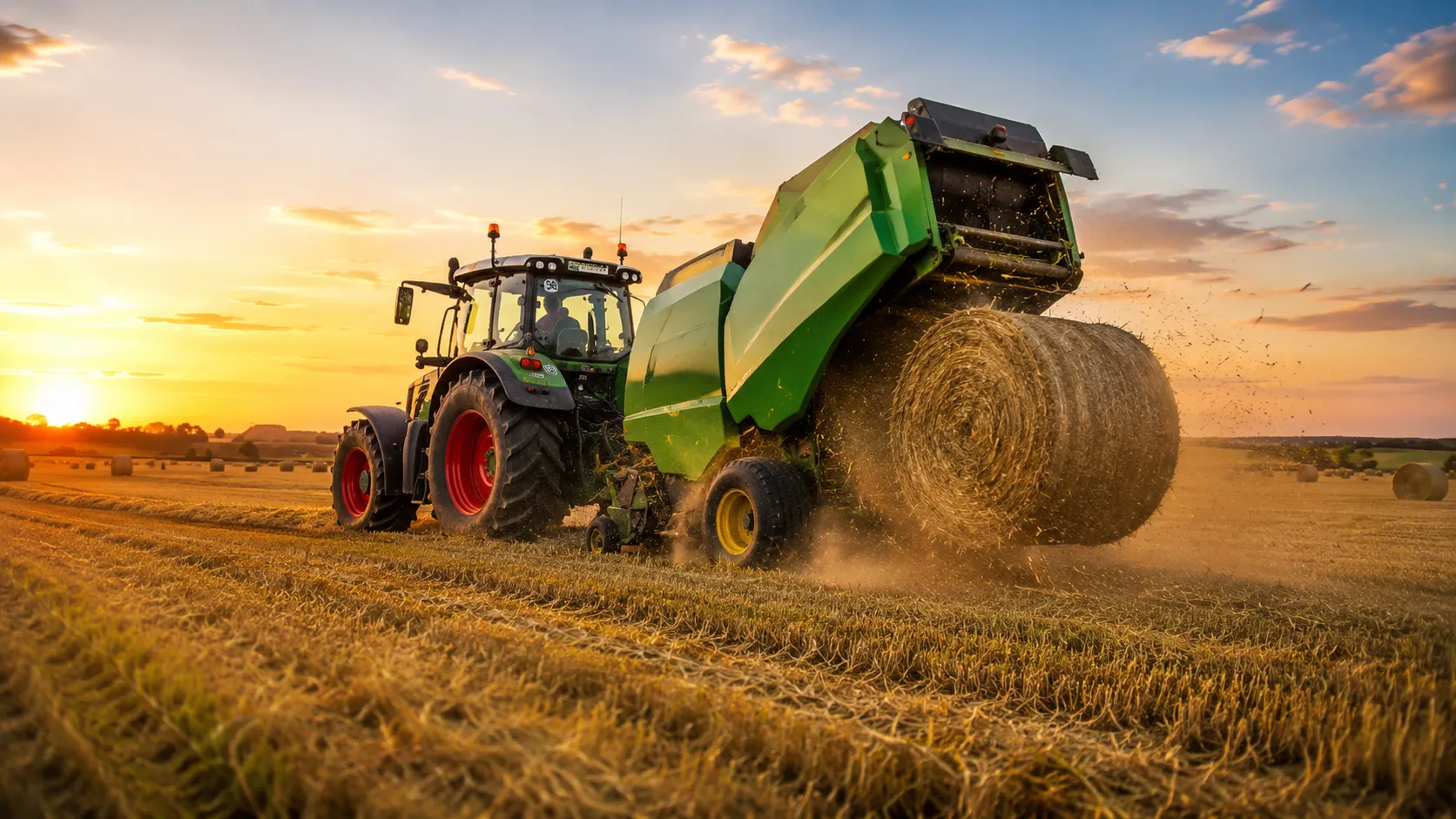
A square baler working paddy straw — crop conditions, tractor HP, and field terrain all determine which model delivers the best value per bale.
Paddy straw and wheat straw account for the majority of baling machine purchases across India every harvest season. Yet the single most common sourcing mistake buyers make is selecting a model based on price alone — without checking whether the pickup width matches the windrow, whether the minimum HP suits the tractor on the farm, or whether the machine is built for the flat, high-moisture conditions of paddy terrain. This guide walks through every decision point so you can match a square baler for paddy and wheat straw to your specific operation with confidence.
The square baler for wheat straw and paddy straw market has expanded significantly in India since 2020, driven by stubble management regulations, rising demand for crop residue as biomass fuel, and government subsidy schemes for CE-certified agricultural machinery. Understanding what differentiates a good machine from a cheap one before you buy is the single most valuable thing you can do with the next 10 minutes.
Paddy Straw and Wheat Straw — the Baling Challenge
Paddy straw and wheat straw present a specific set of conditions that are different from hay baling in European or North American contexts. Understanding these differences is the first step to choosing the right machine.
Why paddy straw is harder to bale than it looks
Paddy straw has one of the highest silica content levels of any agricultural residue — typically 10 to 15 percent silica by dry weight. Silica is abrasive. It wears pickup tines, compression chamber surfaces, and knotter components faster than wheat straw, alfalfa, or grass hay. A machine that lasts 12 seasons on wheat straw in Australia may show significant wear after 6 to 8 seasons on paddy straw in Punjab — if the operator does not account for this in the maintenance schedule.
Paddy straw is also flat after harvest — it falls close to the ground in a compressed layer that can be difficult for poorly calibrated pickup mechanisms to gather cleanly. If the pickup height is set too high, the machine leaves residue behind. Too low, and it picks up soil along with the straw, contaminating the bale and accelerating wear on internal components.
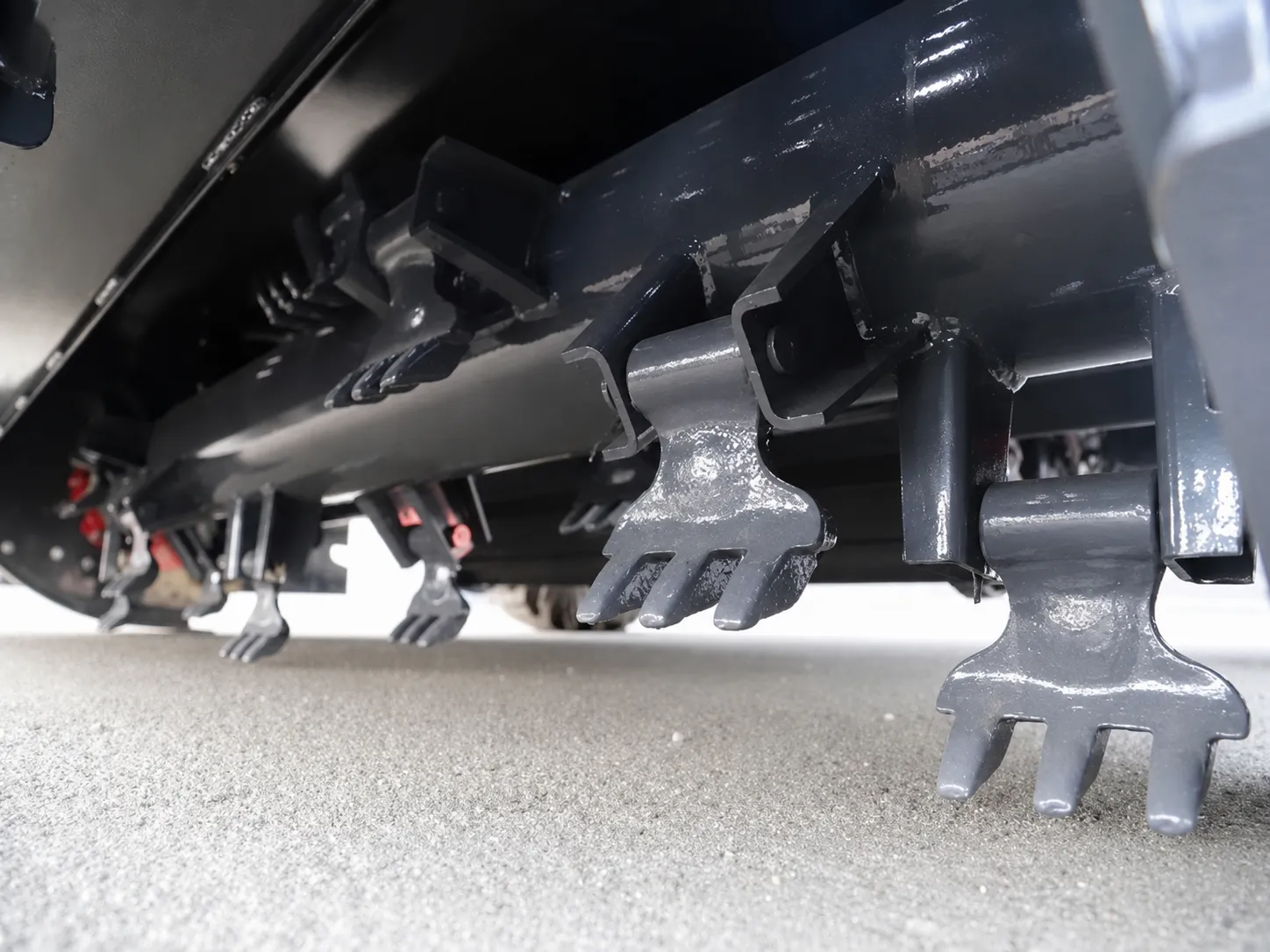
The spring-tooth pickup mechanism in detail. Correct ground clearance setting is critical for clean paddy straw collection without soil contamination.
Wheat straw — the more forgiving crop
Wheat straw is generally easier to bale than paddy straw. It is lighter, slightly less abrasive, and tends to windrow more cleanly after the combine. The main challenges on wheat straw are moisture management — baling before moisture rises above 18 percent — and matching tractor speed to windrow density to achieve consistent bale weight across the field.
Both paddy straw and wheat straw should be baled when moisture content is between 10 and 18 percent. Above 18 percent the bales will heat in storage and may develop mould. Below 10 percent the straw becomes brittle and you lose significant dry matter through the pickup mechanism. Monitor moisture with a simple hay probe before committing the tractor to the field.
Matching Tractor HP to the Right Square Baler Model
The minimum HP requirement on any baler specification sheet is the absolute minimum for the machine to function. It is not the ideal operating point. Running a baler at its minimum power threshold produces inconsistent bale density, higher knotter failure rates, and excessive tractor engine load that shortens both machine and tractor working life. The practical recommendation is to run the baler at 115 to 130 percent of its stated minimum — meaning a machine rated at 40 HP minimum is best operated with a 46 to 52 HP tractor.
| Model | Minimum HP | Ideal Operating HP | Max Compatible HP | Pickup Width |
|---|---|---|---|---|
| 9YF-1700 | 40 HP | 46 – 52 HP | 65 HP | 1700mm |
| 9YF-1900 | 50 HP | 58 – 65 HP | 100 HP | 1900mm |
| 9YF-2200 | 50 HP | 58 – 65 HP | 90 HP | 2200mm |
| 9YF-2200S with shredder | 100 HP | 110 – 120 HP | 130 HP | 2200mm |
Notice that the 9YF-1900 and the 9YF-2200 share the same minimum HP requirement of 50 HP. This is one of the most common sources of confusion when comparing square baler prices. Both machines will technically function behind the same 50 HP tractor — but the 2200mm pickup width of the 9YF-2200 covers 300mm more windrow per pass, delivering meaningfully higher seasonal output for the same fuel and labour cost.
Spring-Tooth Pickup Explained for Paddy Conditions
The spring-tooth pickup is the standard mechanism on all three models in the standard square baler range. It uses a series of spring-loaded tines mounted on a rotating reel to lift and sweep material from the ground into the compression chamber. For paddy straw and wheat straw the spring-tooth design is the correct choice — it handles flat, low-to-ground material efficiently and is well-suited to the soil and moisture conditions of Indian paddy fields.
Setting pickup height for paddy terrain
The pickup height adjustment is one of the most critical — and most often overlooked — setup steps for paddy straw baling. The tines should clear the ground by approximately 25 to 35mm on flat paddy terrain. On uneven or cloddy ground increase this to 40 to 50mm to avoid soil ingestion. Check the actual ground clearance by sliding your hand under the lowest tine at rest — it should clear your fingers comfortably without daylight visible from the side.
When to consider a different pickup for your crop
Spring-tooth pickups are not suitable for standing corn stalks, standing cotton stalks, or any crop residue that has not been cut and laid flat before baling. If your operation involves corn stover or cotton residue baling in addition to paddy or wheat straw, you will need the hammer-claw pickup option available on the 9YF-2200S. Running a spring-tooth pickup on standing stalks will cause pickup mechanism damage and field blockages within the first season.
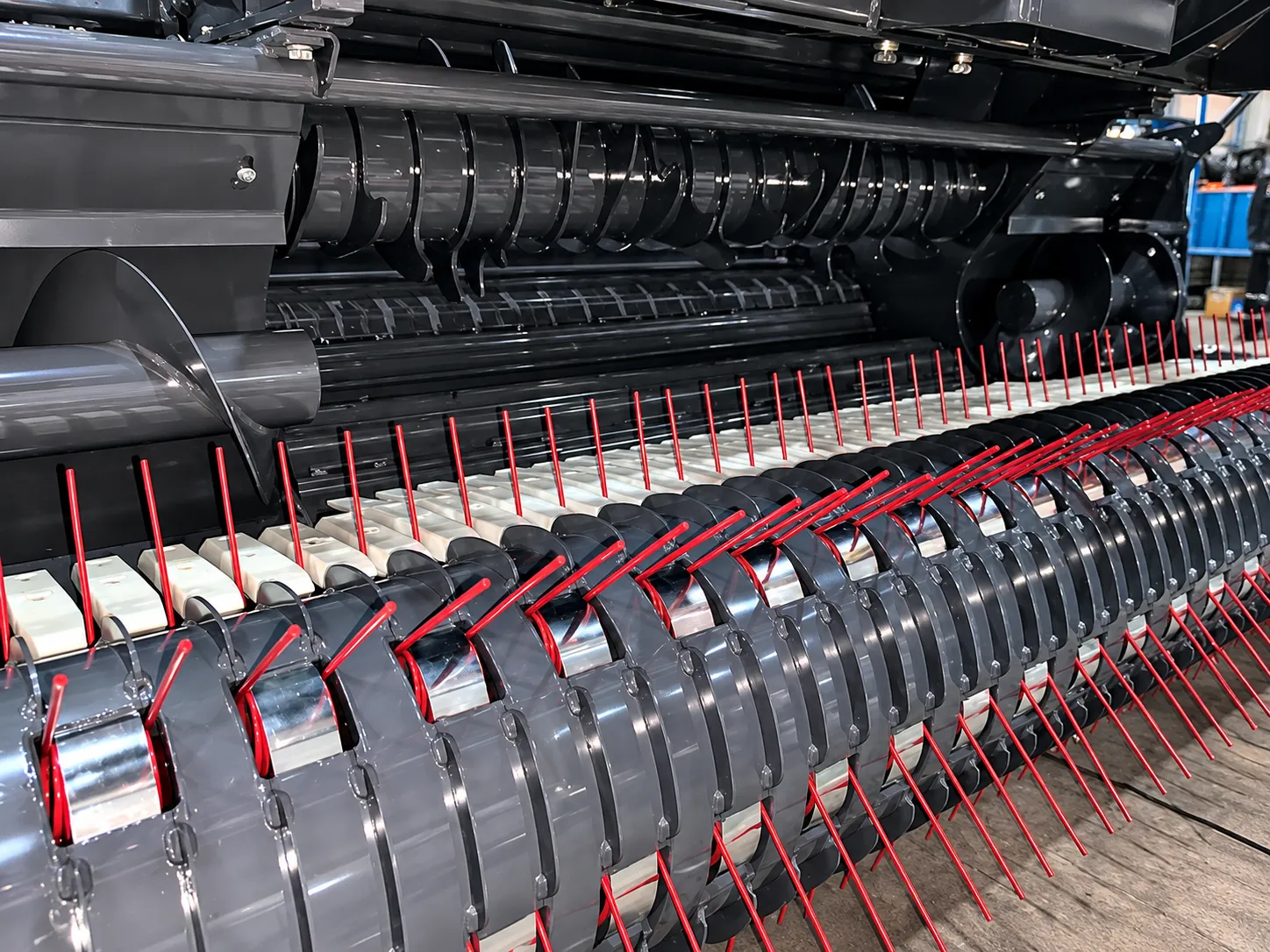
Spring-tooth tine detail. For paddy straw and wheat straw on flat Indian farmland this is the correct pickup design. The silica content of paddy straw will wear these tines faster than softer crops — plan annual tine inspection.
Model-by-Model Guide: Which Square Baler Suits Your Paddy or Wheat Straw Operation
Small farms — under 80 hectares per season
For operations baling under 80 hectares of paddy or wheat straw per season with a tractor in the 40 to 55 HP range, the 9YF-1700 small square baler is the practical entry point. Its 1700mm spring-tooth pickup handles paddy terrain well, and at 1,750 kg it is light enough to transport between fields without requiring a heavy-duty trailer. The machine runs on India’s most common small utility tractors without any power matching concerns.
Medium farms — 80 to 250 hectares per season
Medium-scale operations baling between 80 and 250 hectares per season are the core market for the 9YF-1900 mid-size square baler. The 1900mm pickup width covers a wider windrow than the 1700mm model, and the 50 to 100 HP power compatibility range means it works with practically every mid-range farm tractor available in India — from Mahindra to John Deere to Sonalika. This is the most frequently recommended model for paddy-growing regions with mixed tractor fleets.
Large farms and custom baling contractors — over 250 hectares per season
For operations running over 250 hectares per season, or custom baling contractors who move between farms, the 9YF-2200 large square baler delivers the best return on investment. The 2200mm pickup width covers the widest windrow in a single pass, maximising throughput per tractor hour. The machine weighs 1,950 kg and is CE and ISO certified for international markets, making it suitable for export-focused contract operations as well as large domestic farms.
The 9YF-2200 typically recovers its price premium over the 9YF-1900 within 1.5 to 2 baling seasons for contractors running over 300 hectares per year. The 300mm additional pickup width translates to approximately 14 percent fewer tractor passes per hectare — a significant saving in fuel, time, and driver fatigue across a full season.

An Ever-Power customer with the 9YF-2200 square baler. Factory-direct purchase and direct technical support relationship with the manufacturer.
Field Setup for Maximum Throughput on Paddy and Wheat Straw
Getting the baler setup right before entering the field is the single most effective way to improve throughput and reduce maintenance costs. Most field problems that operators blame on the machine are actually caused by incorrect setup.
Windrow preparation
The windrow width should be slightly narrower than the pickup width of the machine you are using. For the 9YF-1900 with a 1900mm pickup, aim for a windrow of 1700 to 1800mm. For the 9YF-2200 with a 2200mm pickup, aim for 1900 to 2100mm. A windrow that is too wide causes the pickup edges to drag on the ground and ingest soil. A windrow that is too narrow reduces throughput unnecessarily.
Tractor speed
The ideal tractor speed for paddy straw baling is typically 5 to 8 km/h. At this speed the pickup mechanism can gather material cleanly without overfilling the compression chamber. Operators often run too fast to save time — the result is inconsistent bale density, higher knotter failure rates, and more blocked pickup mechanisms. Slowing down by 1 to 2 km/h typically increases bale density by 15 to 20 percent and reduces machine downtime significantly.
PTO speed
All three models in the standard square baler range operate at 540 rpm PTO speed. Confirm your tractor’s PTO is set to 540 rpm before engaging the baler — running at 1000 rpm will over-speed the knotter mechanism and cause rapid wear or immediate failure. The PTO shaft length must also be verified: the shaft should never bottom out at full compression of the hitch and should never separate at maximum turn angle.
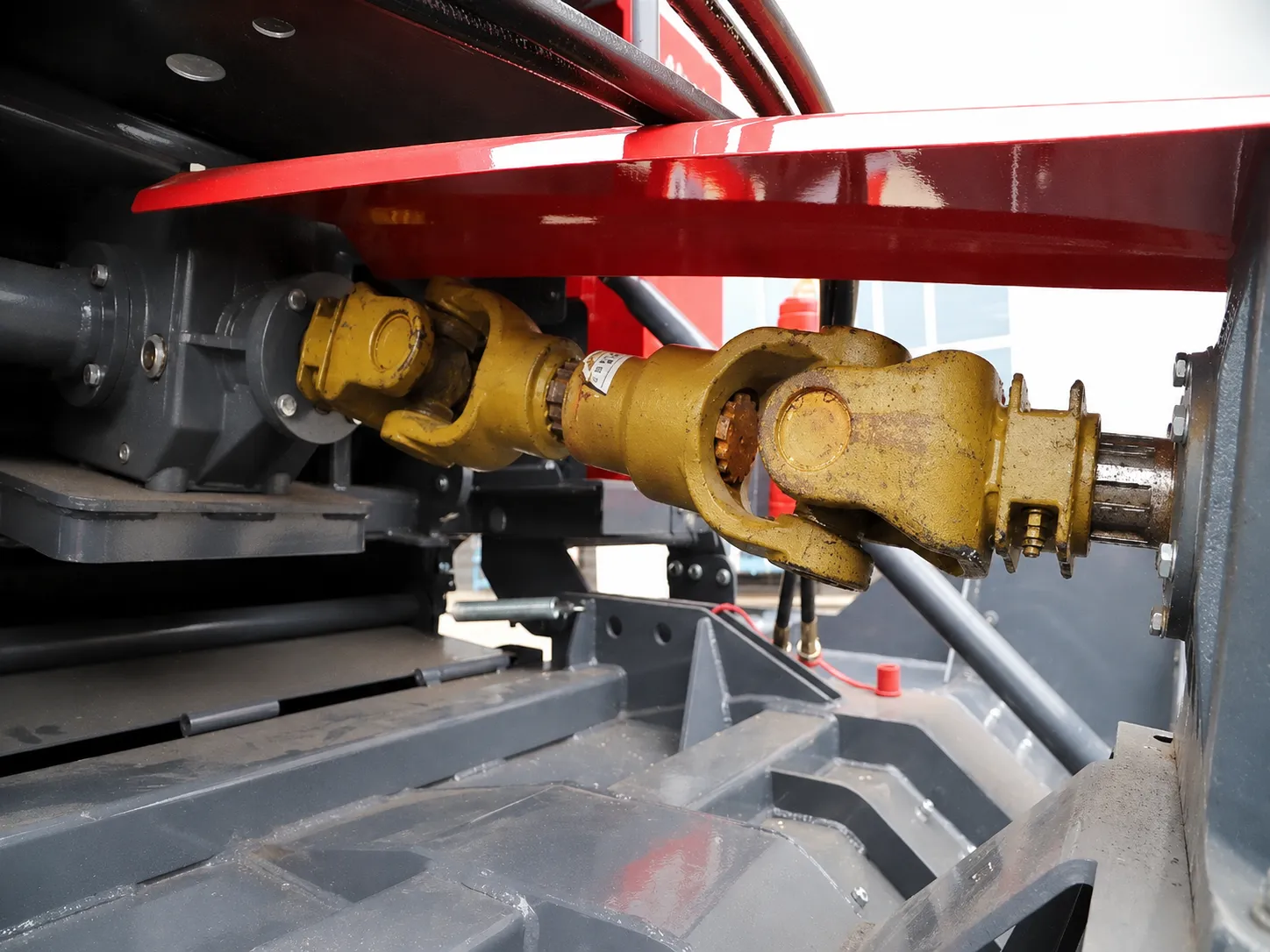
The PTO driveshaft connection on a square baler. Correct PTO speed (540 rpm) and shaft length verification are critical setup steps before entering the paddy field.
- Straw Baler Machine Price Guide 2026 — full price ranges and FOB cost breakdown
- 9YF-1700 Small Square Baler — specifications for 40 HP paddy farm operations
- 9YF-1900 Mid-Size Square Baler — most versatile model for Indian paddy farms
- 9YF-2200 Large Square Baler — highest output for large-scale paddy and wheat straw
- How to Choose a Baling Machine Manufacturer — 7 questions to ask before ordering
Frequently Asked Questions
Which square baler model is best for paddy straw baling with a 50 HP Mahindra tractor?
The 9YF-1900 mid-size square baler is the recommended model for a 50 HP Mahindra tractor on paddy straw. It operates within the 50 to 100 HP range without power matching concerns, and the 1900mm pickup width handles flat paddy windrows efficiently. It is CE and ISO certified and eligible for SMAM government subsidies in India.
What is the ideal moisture content for baling paddy straw?
Paddy straw should be baled when moisture content is between 10 and 18 percent. Above 18 percent the bales will heat in storage and develop mould. Below 10 percent the straw becomes brittle and you lose dry matter through the pickup. Test moisture with a hay probe before entering the field — do not rely on time since harvest as the indicator.
Can the same square baler handle both paddy straw and wheat straw?
Yes. All three models in the 9YF range — the 1700mm, 1900mm, and 2200mm — handle both paddy straw and wheat straw without modification. The spring-tooth pickup mechanism is suitable for both crops when they have been cut and raked into flat windrows. The only adjustment required between crops is the pickup height setting and possibly the bale density target.
How do I prevent soil contamination in paddy straw bales?
Set the pickup height to 25 to 35mm ground clearance on flat paddy terrain. On uneven or cloddy ground increase to 40 to 50mm. Always rake the paddy straw into a clean windrow before baling — picking up straw that is still mixed with loose soil at the ground level will contaminate the bale and accelerate internal wear on the compression chamber.
Is government subsidy available in India for purchasing a square baler for paddy straw?
Yes. Under the Sub-Mission on Agricultural Mechanization (SMAM) scheme, eligible farmers and FPOs can access subsidies of 25 to 50 percent on CE-certified agricultural machinery including square balers. All Ever-Power 9YF models carry CE and ISO certification. Contact your local Krishi Vigyan Kendra or state agricultural department for current subsidy schedules and application procedures in your district.
What is the price difference between the 9YF-1900 and 9YF-2200 for paddy straw operations?
The 9YF-1900 is priced at approximately $5,500 to $7,200 FOB and the 9YF-2200 at $6,800 to $9,000 FOB — a difference of roughly $1,300 to $1,800. For a custom baling contractor running over 250 hectares of paddy per season the 9YF-2200’s additional 300mm pickup width typically recovers this premium within 1.5 to 2 seasons through reduced tractor hours and fuel savings.
Tell us your tractor HP, primary crop, and approximate seasonal bale volume. We send a matched model recommendation and factory-direct price — no sales pressure, no intermediary margin.