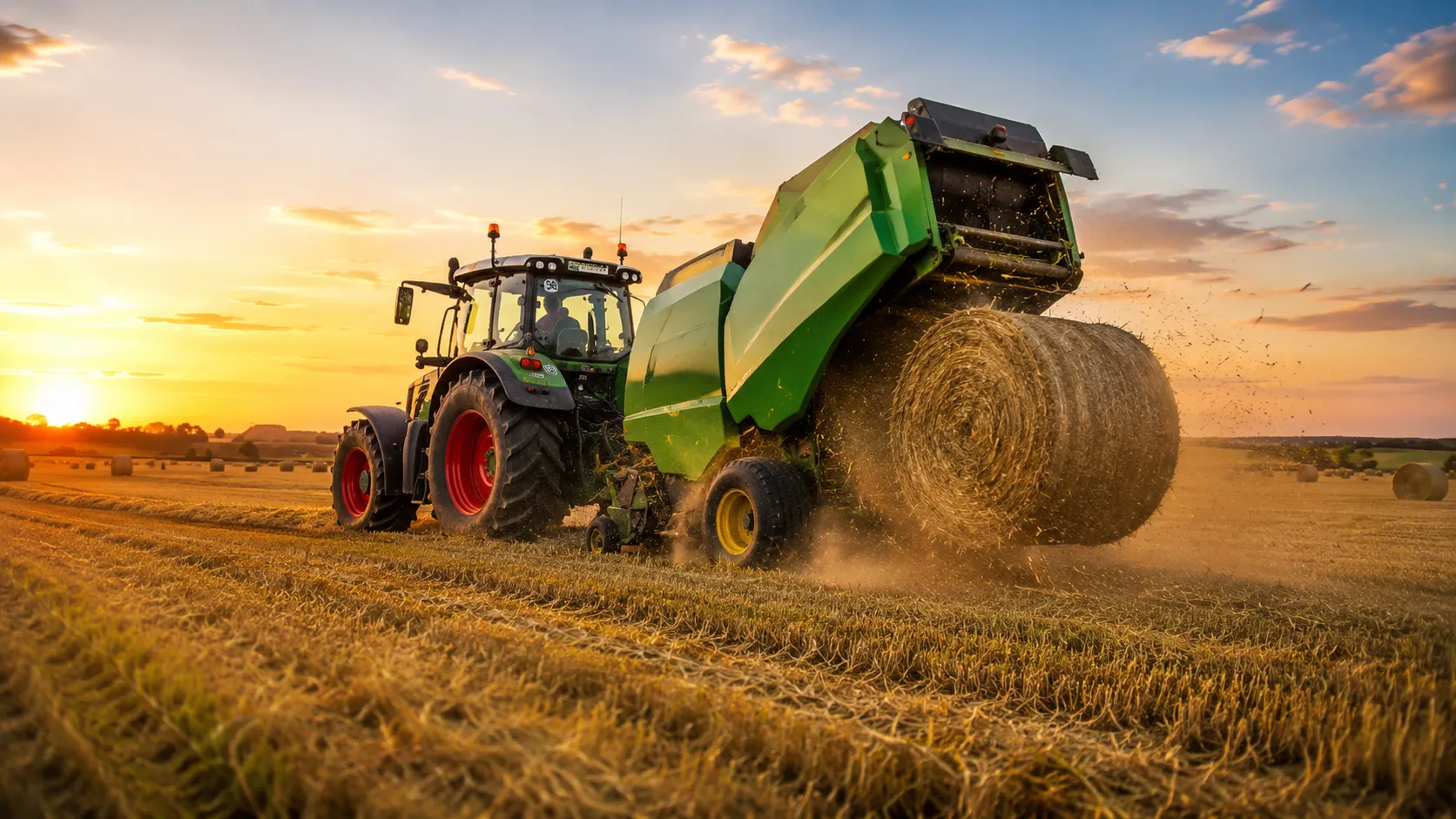
The 9YF-2200 large square baler at work — one of the most asked-about models when buyers compare straw baler machine prices.

The straw baler machine price question is one of the most common — and most misunderstood — buying decisions in agricultural equipment. Walk onto any dealer lot or open any B2B sourcing platform and you will find machines carrying the same basic function but priced anywhere from $4,000 to over $20,000. The gap is real and it is not arbitrary. Every dollar of price difference reflects a specific engineering decision, a material choice, or a capability the cheaper model simply does not have.
This guide was written by the engineering and sales team at Ever-Power, a dedicated square baler and round baler manufacturer that has shipped machinery to farms across India, the United States, Australia, Brazil, and over 30 other countries. What follows is an honest breakdown of every factor that determines the price you pay and the performance you get.
Whether you are comparing a tractor baler price for a 40-horsepower compact machine on a small paddy farm or evaluating a commercial wheat straw baler machine for a 500-hectare operation, this guide gives you the framework to make a confident decision.
What Actually Drives the Price of a Straw Baler Machine
Before comparing any two machines on price alone, you need to understand the four primary variables that account for almost all of the cost spread in the hay baler for sale market. Each one represents a genuine engineering trade-off — not a manufacturer’s margin game.
1. Pickup width — the single biggest output variable
The pickup mechanism is the front-facing reel that gathers the windrow from the ground. It comes in three widths on commercial square balers: 1700mm, 1900mm, and 2200mm. A wider pickup covers more ground per pass, which means fewer tractor hours per hectare and significantly higher seasonal throughput.
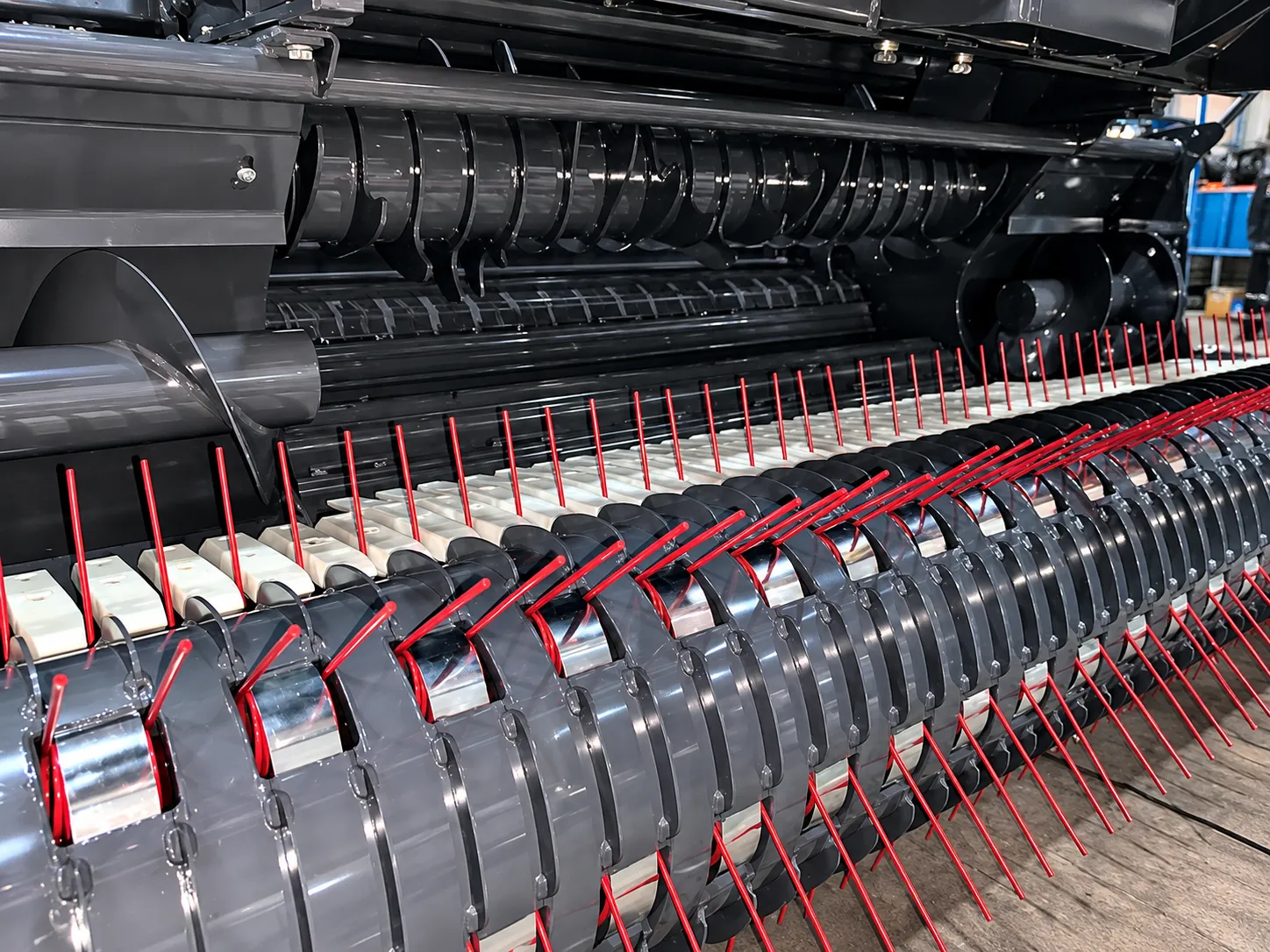
Spring-tooth pickup tines on the 2200mm head. Wider pickup width is one of the most direct cost drivers in any square baler price comparison.
2. Knotter system — reliability where it counts
D-type knotters are the mechanical heart of every square baler. They tie the rope that binds each bale. Entry models carry two knotters. The double-chamber 9YFS-2.2 carries four knotters total. More knotters cost more to manufacture but also deliver more output per tractor hour.
Always confirm the exact number of knotters before placing an order. A single-knotter baler working dense paddy straw will produce a meaningful percentage of loose or mis-tied bales — especially as knotter wear increases across a long season. Double-knotter systems are worth the price premium on any commercial operation.
3. Pickup type — spring tooth vs. hammer claw
Standard spring-tooth pickups are designed for windrowed material — straw, hay, or forage that has been cut, dried, and raked into flat rows. They handle wheat straw, rice straw, paddy straw, alfalfa, and soybean stover well. Hammer-claw pickups — used on the 9YF-2200S and the 9YG-1.25 corn stalk round baler — are designed to grab upright or lodged stalks that a spring-tooth mechanism would miss or jam on. This adds to the baler machine cost but it is the only viable option for corn, cotton, and sorghum residue.
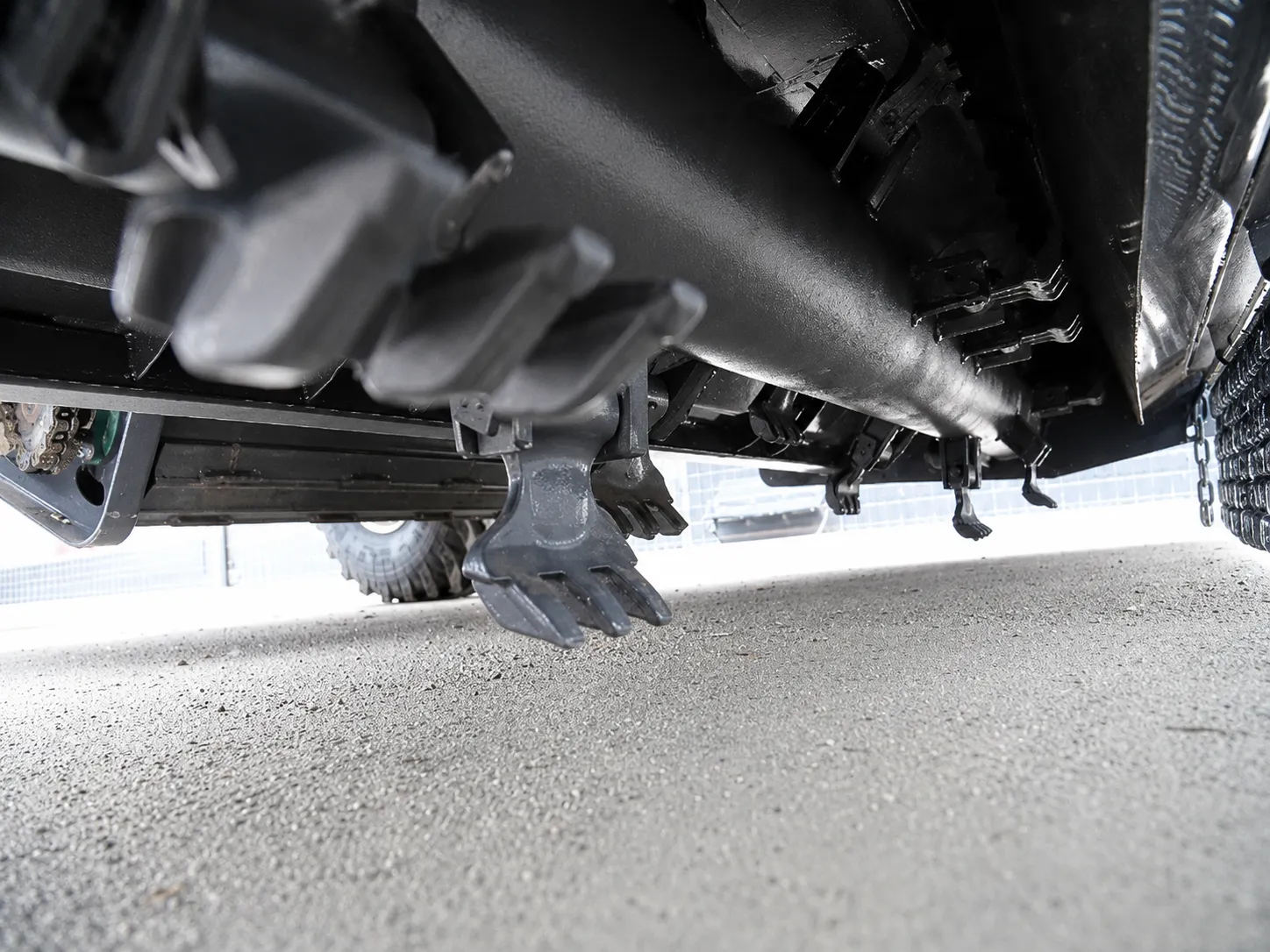
The hammer-claw pickup mechanism — required for corn stalks, cotton stalks, and standing sorghum residue. A different engineering solution that adds to the baler machine price.
4. Certification and build quality — the cost of compliance
CE certification and ISO 9001 are not free to obtain or maintain. Machines carrying these marks have been through documented testing, design review, and ongoing audit processes. Cheaper machines on import platforms often carry fraudulent marks — a risk that becomes obvious when a machine is held at customs or fails in the field with no local support. Every model in the Ever-Power square baler range — from the entry-level 9YF-1700 small square baler to the heavy-duty 9YF-2200S with dual crusher — carries both CE and ISO certification.
Price Ranges by Machine Type — 2026 FOB Guide
The following price ranges are indicative FOB (Free On Board) factory prices for 2026. They represent the price at the factory gate before international freight, port charges, import duties, and local taxes.
| Model | Pickup | Min. HP | Knotters | Weight | FOB Price Range |
|---|---|---|---|---|---|
| 9YF-1700 Small square baler | 1700mm | 40 HP | 2 | 1,750 kg | $4,200 – $5,800 |
| 9YF-1900 Mid-size square baler | 1900mm | 50 HP | 2 | 1,850 kg | $5,500 – $7,200 |
| 9YF-2200 Large square baler | 2200mm | 50 HP | 2 | 1,950 kg | $6,800 – $9,000 |
| 9YFS-2.2 Double-chamber baler | 2200mm | 70 HP | 4 | 3,115 kg | $8,500 – $11,500 |
| 9YF-2200S Single-crusher corn | 2200mm | 100 HP | 2 | 2,350 kg | $9,500 – $12,500 |
| 9YF-2200S Dual-crusher silage | 2200mm | 110 HP | 2 | 2,350 kg | $11,000 – $14,500 |
| 9YG-1.0 Compact round baler | 1900mm | 65 HP | N/A | 2,640 kg | $8,000 – $11,000 |
Indicative FOB factory prices for 2026. Freight, import duty, and local taxes are additional. Contact [email protected] for a landed-cost estimate to your port.
When comparing baler machine prices across suppliers, always compare machines with the same pickup width, the same number of knotters, and the same certification status. A 1700mm machine and a 2200mm machine are not alternatives — they are fundamentally different tools built for different farm sizes and operations.
Total Cost of Ownership Beyond the Sticker Price
The purchase price of a straw baler machine is only one part of what you will spend over its working life. Buyers who focus exclusively on the upfront hay baler for sale listing price often underestimate annual running costs by 30 to 50 percent.
Binding material — the predictable annual cost
Twine consumption runs approximately 1 roll per 80 to 120 bales depending on density and crop type. For a 500-bale season that is 5 to 7 rolls. Budget this annually — it scales directly with output and is completely predictable once you know your seasonal volume.
Pickup tines — the wear item most buyers overlook
Spring-tooth pickup tines are wear items. On abrasive crops like rice straw with high silica content, tines may need replacing every 1 to 2 seasons. Always confirm spare parts availability and lead time before purchasing any baling machine. A supplier that cannot deliver tines within two weeks is a serious operational risk at harvest time.
Knotter maintenance — the highest-impact service item
D-type knotters require lubrication every 8 to 10 operating hours. Bill hooks and stripper fingers are the most commonly replaced components. A complete knotter service kit costs a fraction of the downtime a failed knotter causes during peak harvest. Build knotter inspection into your daily pre-operation checklist.
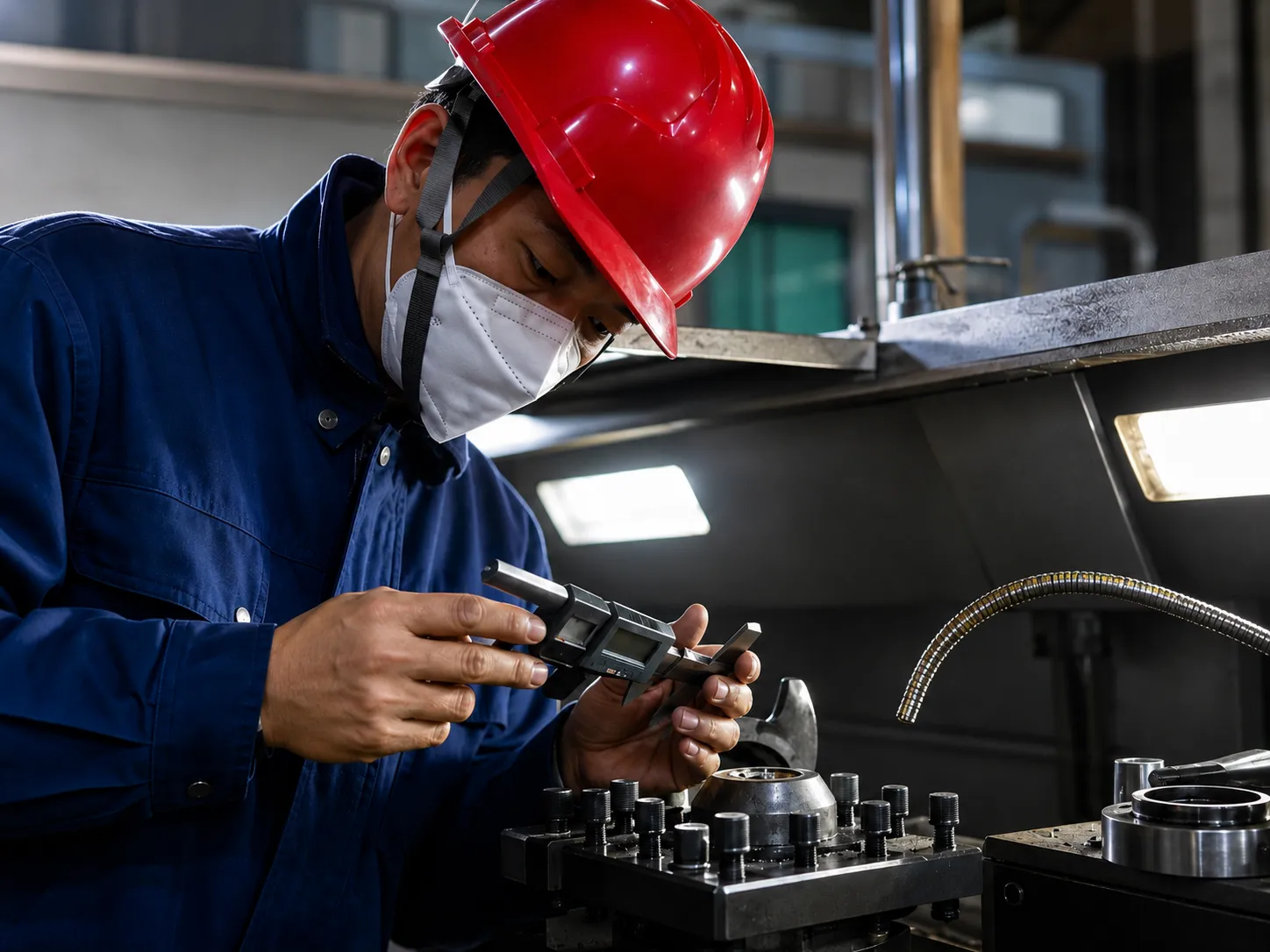
Every machine undergoes pre-shipment quality inspection before leaving the factory — this is included in the FOB price and documented with a formal inspection report.
Freight and import — the cost most FOB quotes hide
Sea freight from factory to your port typically adds 15 to 25 percent to the FOB price. Always request a CFR (Cost and Freight) or CIF (Cost, Insurance and Freight) quote from the manufacturer to understand the true landed cost before comparing suppliers. A machine that looks $500 cheaper FOB may cost $2,000 more once landed due to routing differences.
A well-maintained square baler from a reputable baling machine manufacturer will run 10 to 15 seasons before requiring major structural work. Cheaper machines with inferior chain drives or thin-gauge steel typically show significant wear within 3 to 4 seasons — erasing any upfront savings through replacement costs and downtime losses during harvest.
Model Comparison: 1700mm vs 1900mm vs 2200mm Square Balers
The three standard pickup widths represent three genuinely different operating profiles — not just three price points. Choosing the wrong width for your farm size and tractor HP is one of the most common and expensive mistakes buyers make when comparing square baler prices.
The 9YF-1700 — built for small farms and 40 HP tractors
The 9YF-1700 small square baler is the entry point in the range. At 29.5 kW (40 HP) minimum power requirement and 1,750 kg machine weight, it is purpose-built for small-farm operations with compact or utility tractors. The 1700mm spring-tooth pickup handles wheat straw, paddy straw, rice straw, cotton stalk, corn stover, and pasture grass without adjustment.
- Minimum power: 29.5 kW (40 HP)
- Machine weight: 1,750 kg — lightest in the range
- Bale chamber: 460 x 360 mm single chamber
- Knotter system: twin D-type knotters, automatic rope baling
- Best for: farms under 100 hectares, compact tractor operations
The 9YF-1900 — the most versatile tractor baler in the range
The 9YF-1900 mid-size square baler has the widest tractor power compatibility in the entire range — from 36.8 kW (50 HP) to 73.5 kW (100 HP). That range covers the majority of medium-scale farm tractors in India without any modification or power-matching concern.
- Power compatibility: 36.8 kW (50 HP) to 73.5 kW (100 HP)
- Machine weight: 1,850 kg
- Overall length: 4,965 mm — compact for road transport
- Best for: wheat straw, rice straw, alfalfa, cotton stalk, and mixed forage on flat terrain
The 9YF-2200 — widest pickup, highest seasonal output
The 9YF-2200 large square baler is the most popular model in the range. At 2200mm it covers the widest windrow in a single pass and runs on a 50 HP minimum tractor — the same threshold as the 1900mm, but with 300mm more pickup width. For farms operating over 150 hectares per season, this machine typically recovers its price premium through time savings within two to three seasons.
Match pickup width to your windrow width. If you rake with a 1800mm-width rake, a 2200mm pickup is partially wasted — the outer edges will drag on the ground. The ideal setup is rake width slightly narrower than pickup width for complete crop collection without soil contamination.
Round Baler Price vs Square Baler Price: Which Is Better Value?
The round baler vs square baler price comparison is a question that comes up constantly. The honest answer is that neither type is categorically better value. They serve different operations and the right answer depends entirely on how you store, sell, and use your baled material.
- Stackable bales — efficient barn storage
- Lower FOB price at equivalent pickup width
- Lower twine cost vs. net wrap
- Better for high-density commercial sale
- Simpler mechanics — fewer failure points
- Faster field operation — no pause between bales
- Net-wrap option for outdoor storage without barn
- Better suited to silage production with wrapper
- Handles heavy wet forage more easily
- Lower labour requirement per bale produced
From a pure price-per-bale standpoint, a mid-range square baler at $5,500 to $7,200 FOB will typically produce a lower cost-per-bale than a compact round baler at $8,000 to $11,000 FOB. However the round baler can operate without a storage barn which completely changes the economics for farms in humid climates.
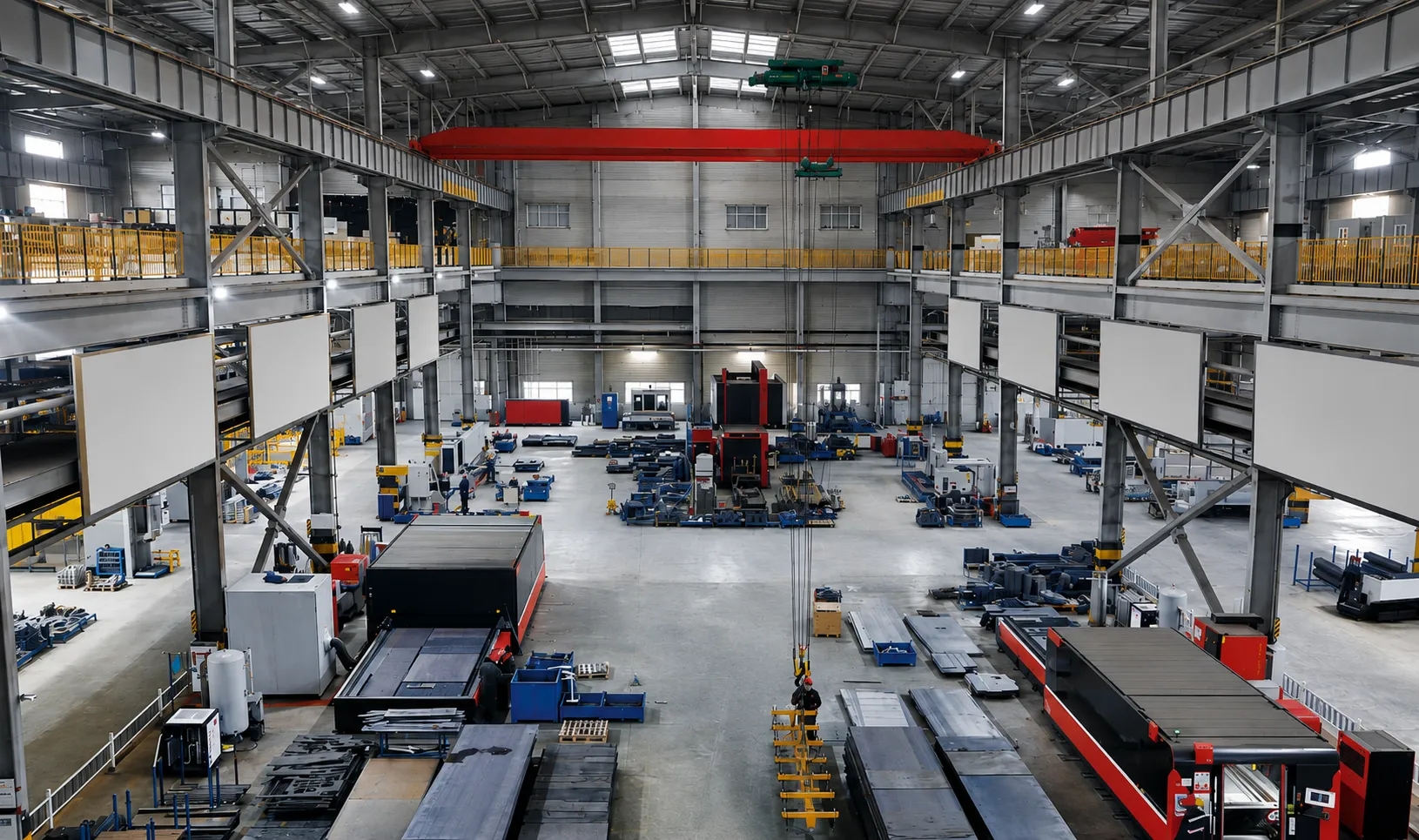
The Ever-Power manufacturing facility. Factory-direct pricing eliminates distributor margins — typically 15 to 30 percent savings for the buyer.
How to Get Factory-Direct Pricing and What It Actually Means
The phrase factory-direct is used loosely in the agricultural equipment market. Some sellers calling themselves factory-direct are trading companies that source from manufacturers and add a margin. Genuine factory-direct purchasing means you are dealing with the entity that designs, welds, machines, and tests the equipment — not a reseller sitting between you and the production floor. For buyers in India and the US, factory-direct pricing typically saves 15 to 30 percent compared to purchasing through a multi-tier distribution chain.
Request a live video factory inspection before placing any order. A genuine manufacturer will show you their production floor, welding stations, assembly line, and testing area on a live call. If the supplier cannot or will not do this, they are almost certainly a trading company. Ever-Power supports live video inspections for all buyers regardless of order size.
Seven questions to ask any baling machine manufacturer before ordering
- What is your annual production capacity for this specific model?
- Can you provide CE certification documentation with a verifiable certificate number?
- What is your standard warranty period and what does it cover?
- Can I inspect production via live video call before making payment?
- Where are spare parts sourced and what is the lead time for replacements?
- Can you provide references from buyers in my country or similar region?
- What is your experience with import documentation to my destination port?
A supplier that cannot answer these questions clearly and promptly is not one you want supplying critical farm equipment. The time to discover this is before the order — not when a machine arrives and spare parts are unavailable for months.
- 9YF-1700 Small Square Baler — full specifications for 40 HP tractor operations
- 9YF-1900 Mid-Size Square Baler — widest tractor HP range in the lineup
- 9YF-2200 Large Square Baler — 2200mm pickup, highest seasonal output
- 9YG-1.0 Compact Round Baler — for farms needing outdoor storage without a barn
- Square Baler vs Round Baler — a full comparison guide
Frequently Asked Questions
What is the straw baler machine price range for a farm with a 50 HP tractor in 2026?
For a 50 HP tractor the 9YF-1900 mid-size square baler is the recommended model. FOB factory price range for 2026 is $5,500 to $7,200. Add 15 to 25 percent for freight and import duty to calculate your full landed cost. Contact our team at [email protected] for a port-specific estimate.
Is a round baler or square baler better value for paddy straw on Indian farms?
For paddy straw on flat Indian farmland a square baler generally offers better value per bale. Paddy straw is low-moisture, flat after harvest, and well-suited to spring-tooth pickup mechanisms. Square bales are stackable which reduces transport cost. The 9YF-1900 covers the majority of tractors used across Indian paddy regions.
What does the hay baler machine price include when buying from Ever-Power?
The FOB factory price includes the machine, all standard components, CE and ISO certification documentation, a pre-shipment quality inspection report, and the operator manual. It does not include sea freight, port handling, import duty, local transport, or consumables. Budget 15 to 25 percent above FOB for the full landed cost.
How do I know if a cheap baler machine price is too good to be true?
Three signals stand out: the seller cannot provide genuine CE or ISO documentation with verifiable certificate numbers; the seller cannot arrange a live video factory inspection; and spare parts lead times are long or the seller cannot name the knotter and tine supplier. These checks take less than one hour and will save you from a machine that cannot be supported in the field.
What government subsidies are available in India for purchasing a straw baling machine?
Under India’s Sub-Mission on Agricultural Mechanization (SMAM) scheme eligible farmers and FPOs can access subsidies of 25 to 50 percent on CE-certified agricultural machinery depending on state and applicant category. All Ever-Power square baler models carry CE and ISO certification making them eligible for subsidy consideration. Contact your local Krishi Vigyan Kendra for current subsidy schedules in your district.
Can the 9YF-1700 small square baler handle rice straw?
The 9YF-1700 handles rice straw well when it has been raked into a clean windrow and moisture is below 18 percent. Rice straw’s high silica content causes faster pickup tine wear than softer crops so budget for more frequent tine replacement. At commercial scale above 200 hectares per season the wider 9YF-2200 pickup will reduce total field hours meaningfully.
What is the difference between single-crusher and dual-crusher corn stalk baler prices?
The 9YF-2200S single-crusher uses one hammer-claw shredder stage and is suited for biomass and general residue management. The dual-crusher model adds a second shredder stage plus a negative-pressure dust removal fan producing cleaner bales for livestock silage and TMR feed. The dual-crusher costs approximately $1,500 to $2,000 more FOB — typically recovered within one season on a dairy operation.
Tell us your tractor HP, primary crop, and approximate seasonal bale volume. We send a matched model recommendation and factory-direct price — no sales pressure, no intermediary margin.