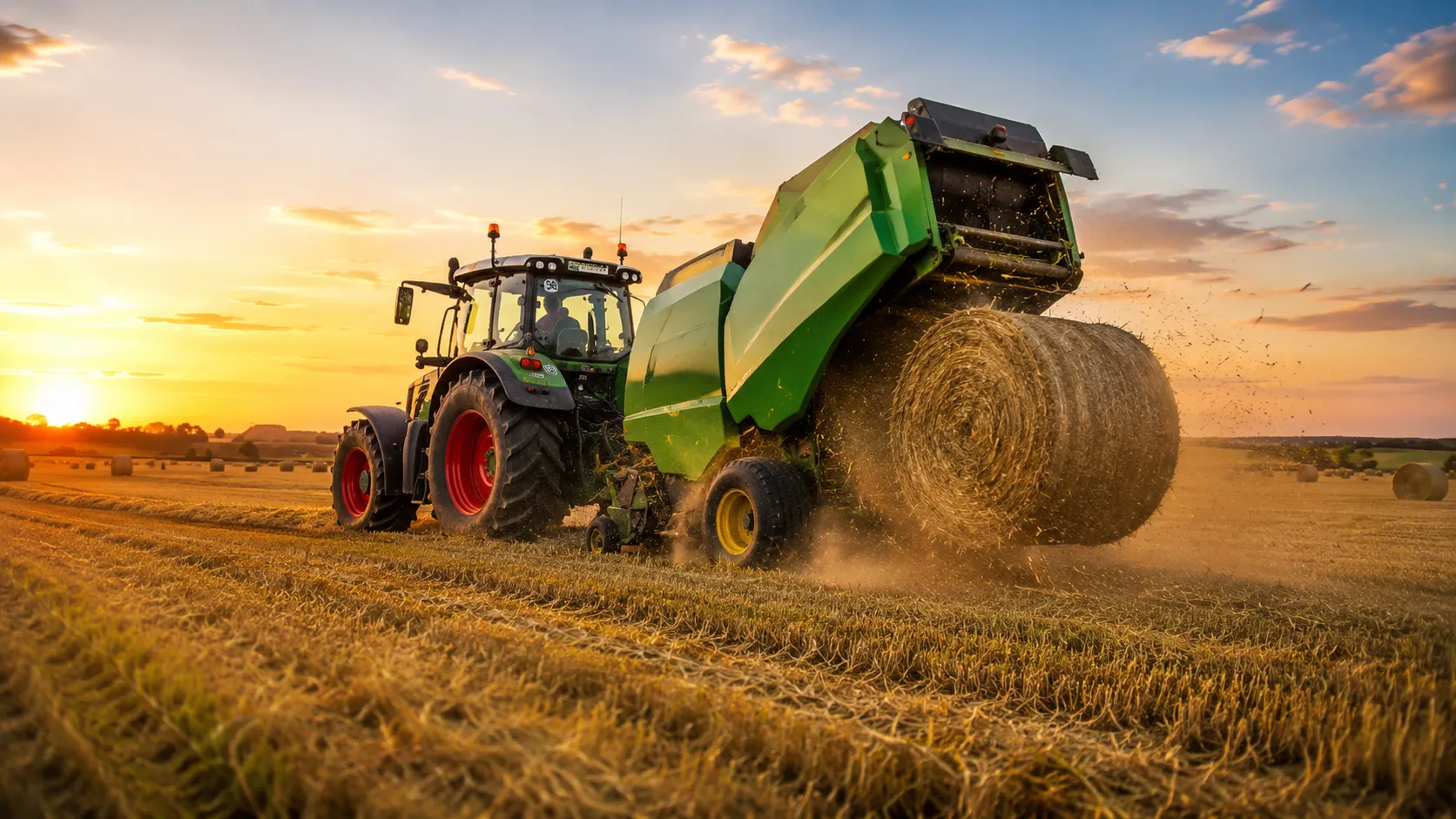
A small square baler discharging a bale. Before comparing any two machines on price, understand the four specification variables that determine field performance.
The small square baler for sale market in the US has expanded significantly in recent years as hobby farms, small-to-medium operations, and custom baling contractors have moved away from renting equipment and toward owning purpose-sized machines. The category covers a wide range — from 40 HP entry-level models producing lightweight bales for hand-stacking to mid-class machines producing commercial-grade bales for the hay market. Knowing where your operation falls within this range is the foundation of a good purchase decision.
This guide covers every specification that separates a small square baler that pays for itself within three seasons from one that becomes an expensive source of field downtime. It also covers the price tiers, the factory-direct vs dealer cost comparison, and the specific questions US buyers most often get wrong when evaluating machines from online listings.
What Small Square Baler Actually Means in 2026
The term small square baler distinguishes machines producing the traditional two-string rectangular bale — typically 14 x 18 inches in cross-section, weighing 40 to 80 lbs depending on crop and density setting — from large square balers (also called big square balers) that produce three- or four-string bales in the 800 to 1,200 lb range. In common US usage, small square baler almost always refers to the two-string format with manual stacking capability.
The defining characteristic of a small square baler is not the machine weight or the price — it is the bale weight. A small square bale must be manageable for one or two people to stack by hand. This constrains the compression chamber dimensions and, indirectly, the pickup width and power requirement. The 9YF-1700 in the Ever-Power range produces bales that fall squarely in this category: 460 x 360 mm chamber, 40 HP minimum tractor, 1700mm spring-tooth pickup.
Small square baler vs mid-size: where the line is
The 9YF-1900 and 9YF-2200 models produce larger bales with higher density and are better described as mid-size commercial square balers than small square balers in the US market context. If your operation hand-stacks bales, the 9YF-1700 is the correct choice. If you move bales mechanically with a bale wagon, elevator, or loader tractor, the larger models deliver better cost-per-bale economics and are worth the additional investment.
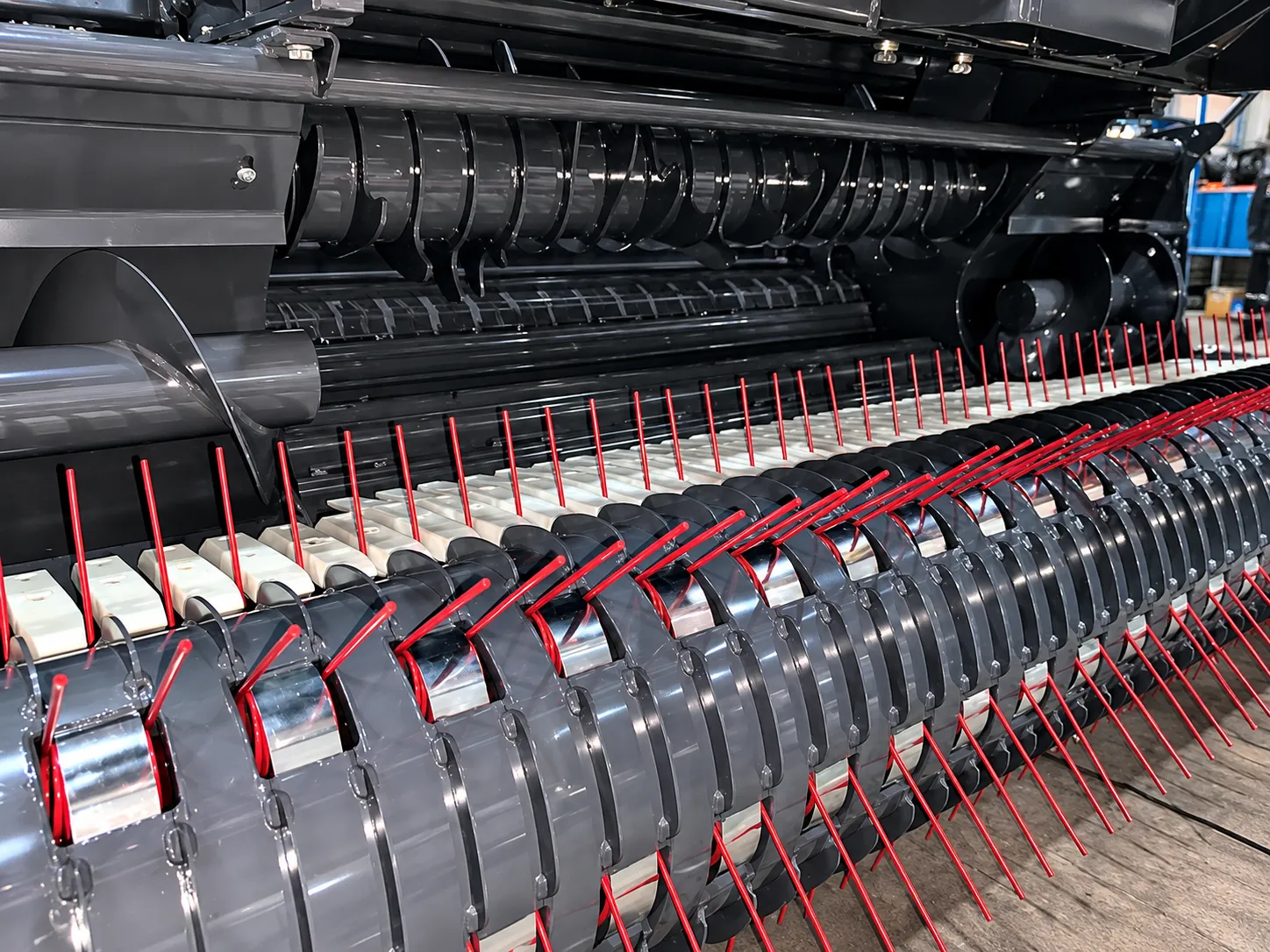
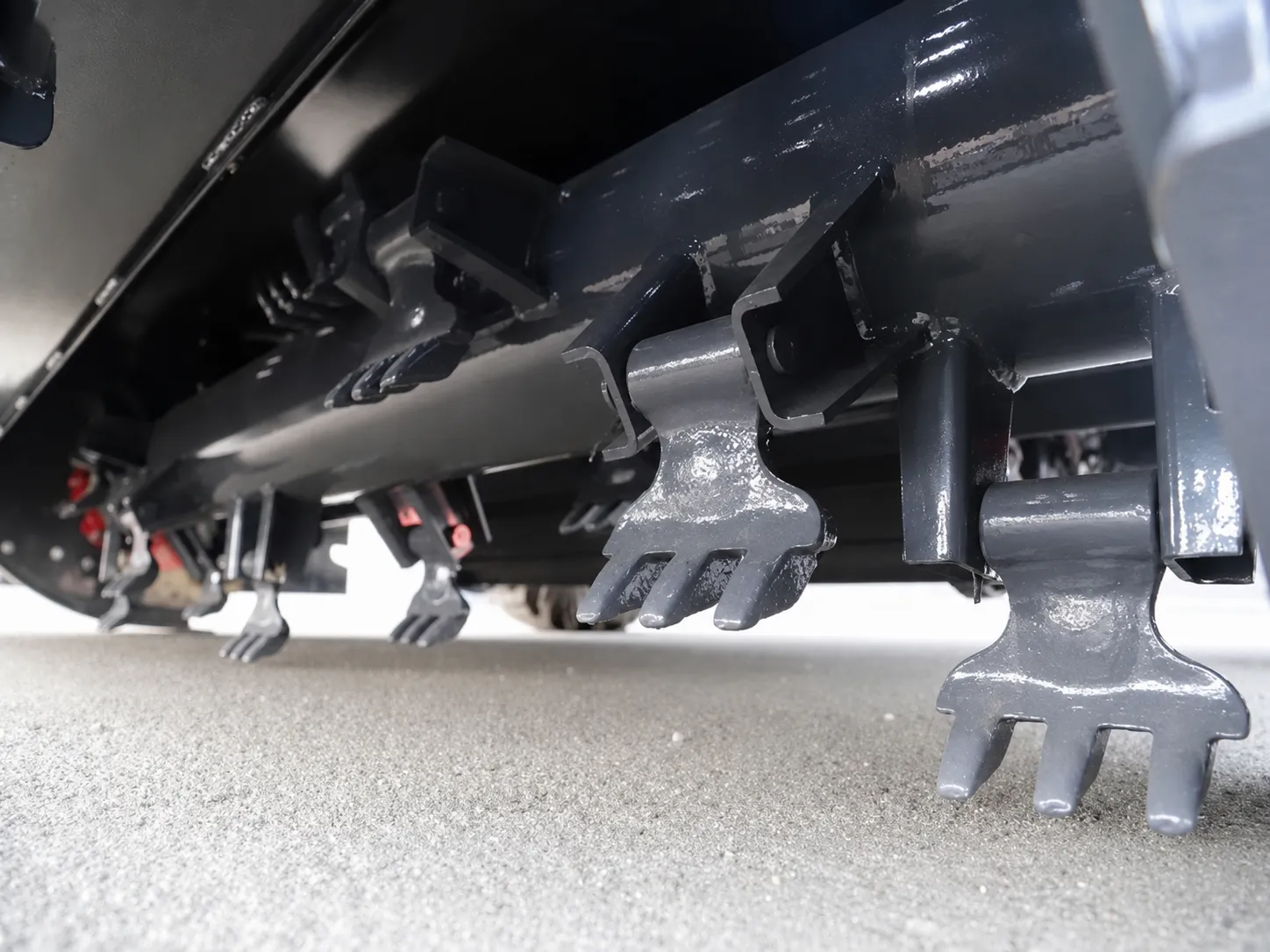
Pickup tine detail on a small square baler. The spring-tooth tine condition and ground clearance setting are the most important pre-purchase inspection points on any used or new baler.
The Four Specifications That Determine Field Performance
1. Pickup width — match your windrow
The pickup width on a small square baler determines how wide a windrow the machine can gather cleanly in a single pass. The 9YF-1700 uses a 1700mm spring-tooth pickup. For most small-farm operations in the US where windrows are raked to 5 to 6 feet wide, 1700mm (approximately 67 inches) provides adequate coverage without the tine edges dragging on the ground outside the windrow.
2. Minimum tractor HP — and why you need more than the minimum
The minimum HP rating on any baler is the absolute threshold for machine function — not the ideal operating point. Running a 40 HP-rated baler behind a 42 HP tractor leaves no power reserve for field undulations, heavy windrows, or dense crop conditions. The practical recommendation is to run at 115 to 130 percent of the stated minimum — meaning a 46 to 52 HP tractor behind a 40 HP-minimum baler delivers the consistency in bale density that makes for a professional-quality product.
3. Knotter count and type
Every small square baler in the two-string format uses two knotters — one for each string. What varies is the knotter design and quality. D-type knotters (used on the 9YF series) are the industry-standard design, manufactured to tight tolerances and designed for 10 to 15 seasons of operation with proper lubrication. Cheaper machines may use imitation D-type knotters with lower-grade bill hooks and stripper fingers that require replacement within 2 to 3 seasons.
4. Build material and certification
Frame steel grade, chain specification, and whether the machine carries genuine CE and ISO certification are the hardest specifications to verify from a listing photo — but they are the ones that determine how long the machine runs between major repairs. Ask for the actual CE certificate number and verify it. A machine with a genuine CE certificate and ISO 9001 production documentation has been through a process that cheap machines have not.
Before buying any small square baler — new or used — run your hand along every drive chain and check for loose pins, stretched links, or uneven wear. A worn chain on a small square baler produces inconsistent bale timing and is the leading cause of knotter misfires at the worst possible moment in the field.
| Spec | 9YF-1700 Small Square Baler | What to verify |
|---|---|---|
| Pickup width | 1700mm spring-tooth | Match to your rake windrow width |
| Min. tractor HP | 40 HP (29.5 kW) | Run at 46-52 HP for best density |
| Knotters | 2 x D-type | Ask for bill hook material grade |
| Bale chamber | 460 x 360 mm | Sets bale weight at your density setting |
| Machine weight | 1,750 kg | Check tow vehicle rating for transport |
| PTO speed | 540 rpm | Confirm tractor PTO selector |
| FOB price range | $4,200 – $5,800 | Add 18-22% for landed US cost |
Matching the Machine to Your Crop and Region
Hay — alfalfa, grass, and mixed forage
For alfalfa and grass hay production in the western US, the 9YF-1700 is well-suited to operations under 200 acres per season. The key setup consideration for alfalfa is baler speed — running slower (5 to 6 mph vs 8 mph) reduces leaf shatter through the pickup mechanism, preserving the nutritional value of the bale. Set the pickup height at 1 to 1.5 inches off the ground on flat alfalfa fields with clean windrows.
Straw — wheat and barley residue
For wheat and barley straw in the midwest and plains states, the machine handles flat, dry material well at standard operating speeds. Straw runs drier (10 to 15 percent moisture) than hay, which means less risk of mould but higher silica content that accelerates pickup tine wear. Budget for tine inspection and replacement every 2 to 3 seasons on continuous straw operations.
Pine straw — southeastern US specialty
Pine straw baling for landscaping use is a specific southeastern US market that requires the small square baler format. Pine needles are short, fine, and uniform — they feed through the 1700mm pickup consistently at low moisture levels. The 9YF-1700 handles pine straw well at medium density settings. The resulting bales are the standard format for retail pine straw sales in the Southeast.
Pickup mechanism at work. For hay and straw in the US, set the pickup ground clearance to 1 to 1.5 inches on flat fields. On uneven terrain increase to 2 inches to prevent soil ingestion.
Price Guide: What to Expect at Each Tier in 2026
The small square baler market in the US spans a wide price range. Understanding what each price tier actually buys — in terms of specification, certification, and after-sales support — prevents the single most common mistake: buying on price alone and paying more in repairs than the savings represented.
| Price tier (landed US) | What you typically get | Risk level |
|---|---|---|
| Under $5,000 | Uncertified, no ISO documentation, unknown knotter grade, limited spare parts | High |
| $5,500 – $7,500 | CE-certified, ISO 9001, genuine D-type knotters, factory-direct support | Low |
| $8,000 – $12,000 | Mid-size models (1900-2200mm), heavier frame, commercial output | Low |
| $15,000+ | Large commercial square balers with four-knotter double chamber | Low |
The 9YF-1700 lands in the $5,500 to $7,500 landed-US-cost tier (from a $4,200 to $5,800 FOB factory price plus approximately 18 to 22 percent for sea freight, port handling, and delivery to farm). At this tier you get genuine CE and ISO certification, factory-direct technical support, verified D-type knotters, and spare parts availability. This is the tier where a small square baler for sale makes long-term financial sense for a serious farm operation.
Factory-Direct vs Dealer: The Cost Difference for US Buyers
Purchasing a small square baler factory-direct from the manufacturer rather than through a US dealer or importer typically saves 20 to 35 percent of the retail price. The saving comes from eliminating the importer margin (typically 15 to 20 percent) and the dealer margin (typically 10 to 20 percent on imported machinery).
The trade-off is that factory-direct purchasing requires more buyer involvement in the import process — arranging freight, customs clearance, and farm delivery. Ever-Power provides the complete documentation package (bill of lading, commercial invoice, packing list, CE certificate, phytosanitary certificate where required) to simplify this process. For buyers purchasing through a freight forwarder, the paperwork handling is straightforward for experienced forwarders who handle agricultural machinery regularly.
If you have not previously imported agricultural machinery, work with a licensed customs broker and freight forwarder rather than attempting self-clearance. A broker who handles agricultural equipment regularly will ensure correct HS code classification, proper quarantine documentation, and correct duty calculation — avoiding delays and penalties that can add weeks and significant cost to your delivery timeline.
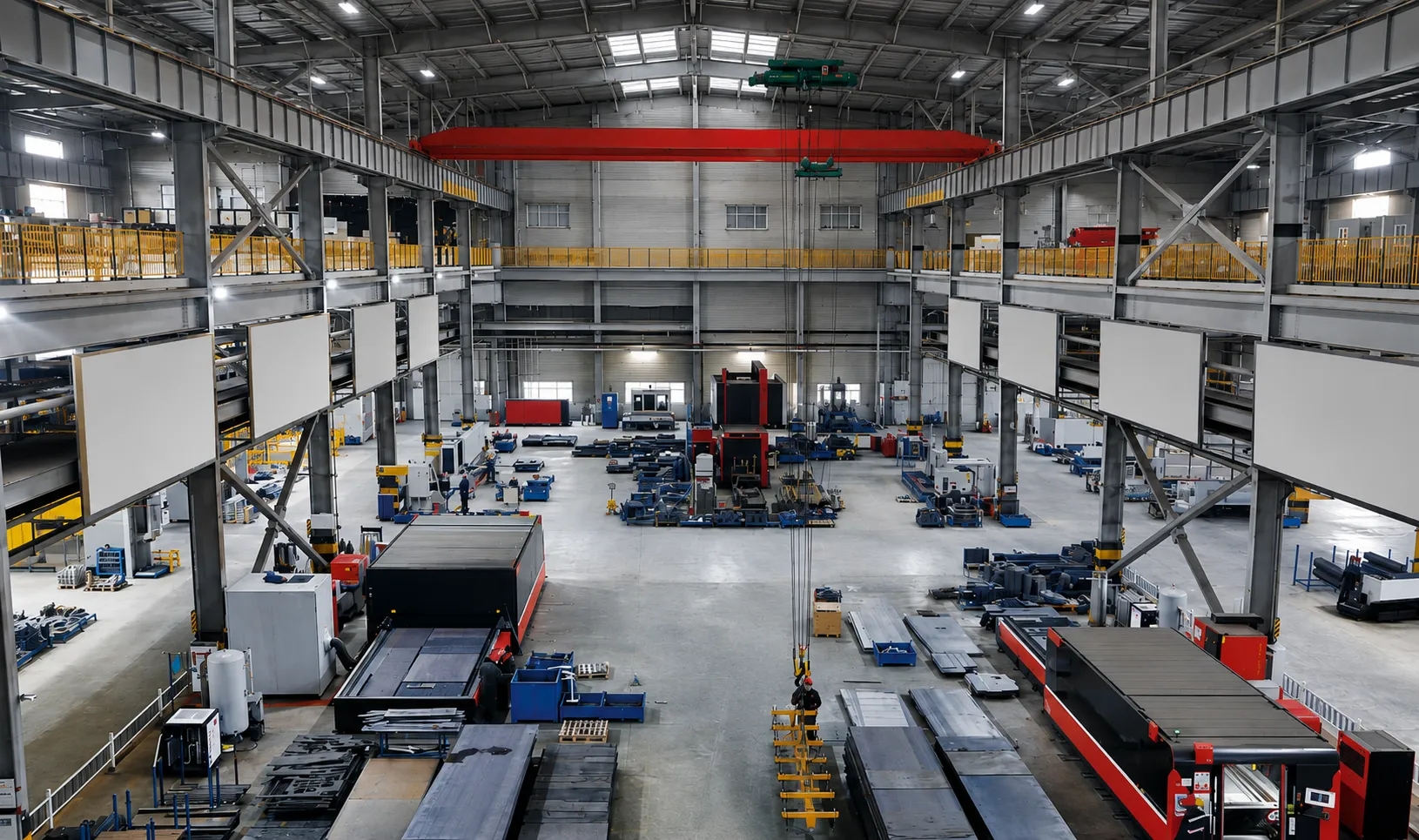
The Ever-Power manufacturing facility. Factory-direct purchasing connects US buyers directly to the production source, eliminating 2 to 3 intermediary margins from the purchase price.
Top Questions from US Buyers on Small Square Balers
Does a Chinese-made small square baler hold up in US field conditions?
The relevant question is not country of manufacture but specification level and certification status. A CE-certified, ISO 9001 manufactured machine with documented quality control is built to the same mechanical standards as its equivalent from any other source. The 9YF-1700 has been operating in US hay and straw fields, Australian dryland conditions, and Indian paddy terrain for multiple seasons — the documented field performance is not theoretical.
What is the parts availability situation for imported balers in the US?
Ever-Power maintains an air-freight spare parts supply chain for the US market. Common wear items — pickup tines, knotter bill hooks, twine discs, stripper fingers, drive chain — are available for air freight with typical delivery in 5 to 10 business days from order. For the most common wear items, we recommend purchasing a preventive maintenance kit at the time of the machine order to have critical components on hand before the first season.
Can the 9YF-1700 handle bermuda grass hay in the Southeast?
Yes. Bermuda grass hay at 15 to 18 percent moisture runs through the 9YF-1700 well. The key setup consideration is windrow density — bermuda forms denser windrows per foot of width than most cool-season grasses, so monitor bale density and adjust the tension spring setting to prevent the machine from producing overly heavy bales that challenge hand-stacking. Set bale length shorter than you would for alfalfa to keep individual bale weight manageable.
- 9YF-1700 Small Square Baler — full specifications and factory-direct pricing
- 9YF-1900 Mid-Size Square Baler — the next step up for larger operations
- Straw Baler Machine Price Guide 2026 — complete FOB price reference
- Tractor Baler Setup Guide — PTO speed, hitch, and pickup height
- How to Choose a Baling Machine Manufacturer — verification checklist
Frequently Asked Questions
What is the best small square baler for sale in the US market in 2026?
The 9YF-1700 is the recommended small square baler for US farm operations requiring a 40 HP compatible, CE-certified machine with genuine D-type knotters, a 1700mm spring-tooth pickup, and factory-direct support. FOB factory price is $4,200 to $5,800; landed US cost is approximately $5,500 to $7,500 depending on destination state and freight routing.
How many bales per hour can a small square baler produce?
Output depends on windrow density and tractor speed. A 9YF-1700 running at 6 to 7 mph on a medium-density hay windrow typically produces 80 to 120 bales per hour. On denser straw windrows at 5 mph, output is typically 60 to 90 bales per hour. Consistent bale output requires a consistent windrow — invest in windrow quality before optimising baler speed.
What is the difference between a 1700mm and a 1900mm small square baler?
The 1700mm model (9YF-1700) and the 1900mm model (9YF-1900) share the same entry-level power requirement of 40 HP and 50 HP respectively. The 1900mm pickup covers a wider windrow in each pass — approximately 10 percent more width — which reduces total tractor passes per field. The 9YF-1900 is better classified as a mid-size commercial square baler than a small square baler, producing heavier bales better suited to mechanical handling.
Is it worth buying a new small square baler or a used one?
New: factory warranty, known specification, no hidden wear on knotters or pickup. Used: lower upfront cost but unknown knotter hours, chain condition, and pickup tine wear. The risk with used balers is that the highest-wear components — knotters and pickup tines — are rarely replaced until they fail, meaning you may purchase a machine that needs $500 to $1,500 of immediate parts within the first season. New from factory-direct at $5,500 to $7,500 landed competes directly with good-condition used balers from the same price range.
Can the 9YF-1700 small square baler handle pine straw in the Southeast?
Yes. Pine straw at typical southeastern field moisture levels (8 to 14 percent) runs through the 9YF-1700 consistently at medium density settings. Set the bale length shorter than for hay to keep bale weight in the 35 to 45 lb range standard for retail pine straw sales. The uniform fine texture of pine needles produces cleaner bale formation than mixed-grass hay.
Tell us your tractor HP, primary crop, and approximate seasonal bale volume. We send a matched model recommendation and factory-direct price — no sales pressure, no intermediary margin.