
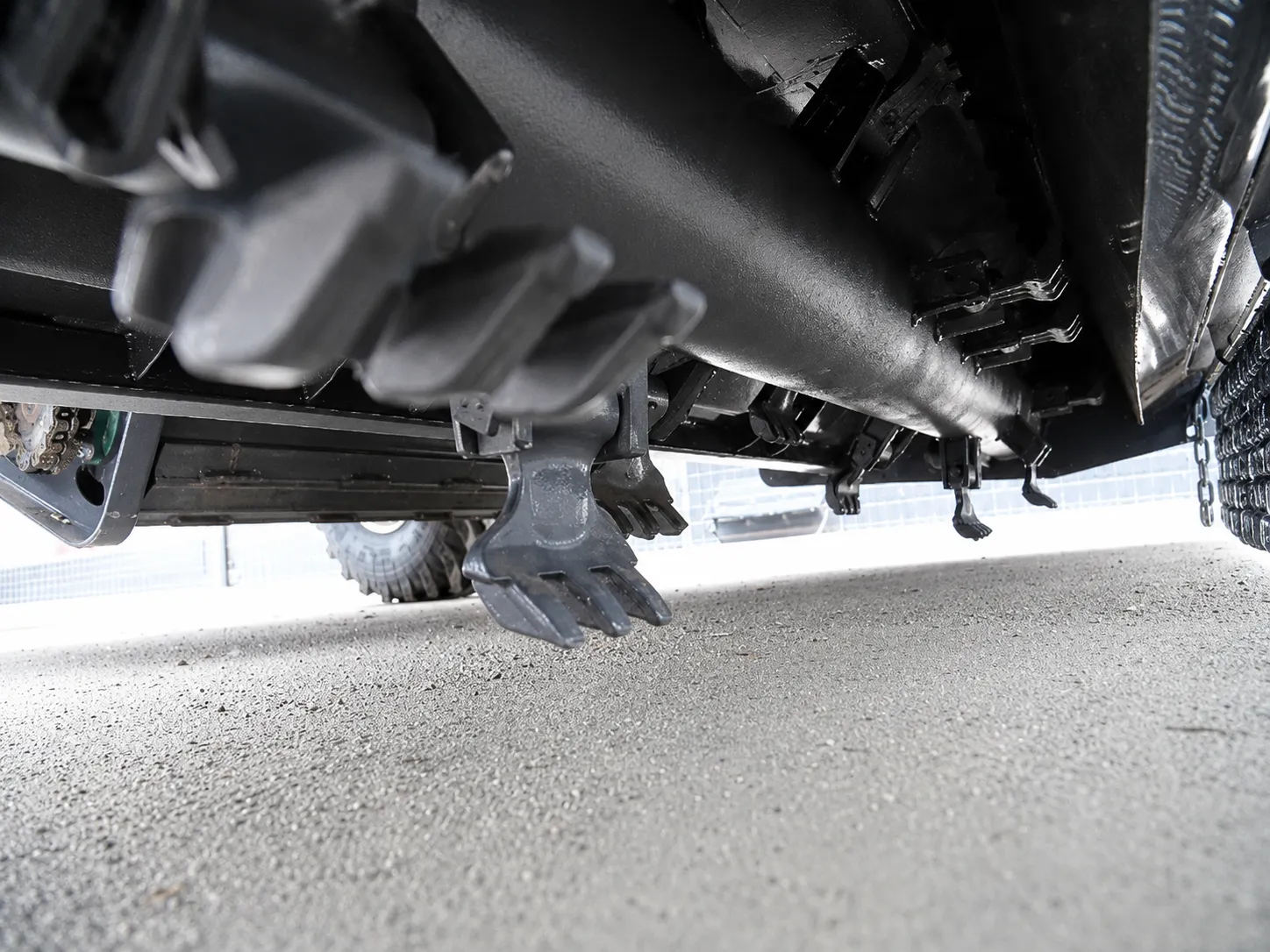
The hammer-claw pickup mechanism — the engineering solution that works where spring-tooth tines fail on standing or lodged corn stalks.

Every year, farmers across India, the US, and Southeast Asia purchase a standard square baler for corn stalk baling and discover the same problem within the first hour of operation: the pickup mechanism jams, the straw enters the compression chamber unevenly, bale density is inconsistent, and machine downtime consumes the savings that motivated the original purchase. This is not a setup error or a maintenance failure. It is the predictable result of using a machine designed for flat, low-profile material on a crop that stands vertically, is high in fibre, and reaches moisture levels that standard baling mechanisms are not built to handle.
This guide explains exactly why standard square balers fail on corn stalks, what the correct engineering solution looks like, and which machines in the 9YF range are purpose-built for corn stalk and corn stover baling at commercial scale.
Why Standard Square Balers Fail on Corn Stalks
Standard square balers — including the 9YF-1700, 9YF-1900, and 9YF-2200 models with spring-tooth pickups — are engineered for material that has already been cut, laid flat, and dried to a workable moisture level. The spring-tooth tines rotate on a horizontal reel and sweep material from the ground by pushing the tines downward and backward in a raking motion. This mechanism is highly effective for material that lies flat at or near ground level.
Corn stalks after harvest do not lie flat. They stand at 30 to 90 degrees from vertical — depending on how the combine processed them and whether they have weathered in the field. A spring-tooth tine approaching a standing stalk at 5 to 8 km/h does not gather it — it bends it, breaks it at the base, and often misses significant portions of the stalk entirely. What does enter the pickup enters unevenly, causing the pre-compression chamber to fill asymmetrically and the compression mechanism to produce bales with significantly varying density.
The specific failure modes on corn stalks
- Pickup mechanism blockage: standing stalks lodge between tines and the pickup reel, causing a blockage within minutes on dense corn stalk fields
- Inconsistent bale density: uneven material entry produces bales with hard spots at one end and loose material at the other, causing handling and storage problems
- Knotter failure: inconsistent bale density results in inconsistent rope tension at the knotter mechanism — a leading cause of premature knotter wear on machines used for corn stalk baling
- Excessive tine wear: corn stalks have a high lignin and fibre content that causes significantly faster tine wear than paddy straw or wheat straw
- Compression chamber damage: fibrous corn stalk material can wrap around the compression ram mechanism if it enters the chamber unevenly
Operators who run a standard spring-tooth baler on corn stalk fields for a full season typically report knotter replacement costs, tine replacement costs, and downtime losses that cumulatively exceed the price difference between the standard model and the correct hammer-claw machine. The cost of using the wrong machine is not the repair bill — it is the lost harvest time.
The Hammer-Claw Pickup Mechanism Explained
The hammer-claw pickup mechanism replaces the spring-tooth reel with a set of rotating flail hammers — hinged metal arms that extend outward under centrifugal force as the pickup reel rotates. These hammer claws strike the base of standing stalks with sufficient force to knock them over and simultaneously chop them into shorter lengths as they enter the pre-compression channel.
The mechanical advantage of this approach is fundamental: the hammer-claw does not need the stalk to be lying flat. It reaches up and attacks standing material from the side and base simultaneously. The chopping action also reduces the effective fibre length of the stalk, which improves compression chamber filling consistency and produces denser, more uniform bales than whole-stalk baling would allow.
The hammer-claw mechanism at rest. In operation the hinged arms extend under centrifugal force and strike the base of standing corn stalks, knocking them over and chopping them into the pre-compression channel simultaneously.
Limitations of the hammer-claw for other crops
The hammer-claw mechanism is not suitable for flat, low-profile material like paddy straw or wheat straw that has already been raked into a windrow. The aggressive chopping action on flat material produces excessive leaf and fine material loss, and the mechanism is not calibrated for the gentle ground-following required on paddy terrain. The hammer-claw is a single-crop specialist — buy it only if corn stalk or other standing-stalk baling is a primary use case on your farm.
Which Machines Are Built for Corn Stalk Baling
In the Ever-Power product range, two machines are specifically engineered for corn stalk baling: the 9YF-2200S square baler with shredder (in single-crusher and dual-crusher variants) and the 9YG-1.25 compact round baler with hammer-claw pickup.
9YF-2200S square baler with corn stalk shredder
The 9YF-2200S is a modified version of the 9YF-2200 large square baler with the spring-tooth pickup replaced by a hammer-claw shredder mechanism. It is the most common choice for corn stalk baling at commercial scale in India and the US — producing rectangular bales of standardised size that are easier to stack, transport, and measure for biomass or livestock feed purposes than round bales.
| Specification | 9YF-2200S Single-Crusher | 9YF-2200S Dual-Crusher |
|---|---|---|
| Min. tractor HP | 100 HP | 110 HP |
| Machine weight | 2,350 kg | 2,350 kg |
| Shredder stages | 1 | 2 |
| Dust removal | Standard | Negative-pressure fan system |
| Crop moisture | 10 – 23% | 10 – 28% |
| Suitable for | Biomass, feed (standard) | Livestock silage, TMR feed |
| FOB price range | $9,500 – $12,500 | $11,000 – $14,500 |
9YG-1.25 compact round baler with hammer-claw
The 9YG-1.25 uses the same hammer-claw pickup philosophy but produces a round bale format rather than a rectangular one. It is the better choice when round bale storage is preferred, when the farm already handles round bales for other crops, or when the operation needs a lighter machine (2,800 kg vs 2,350 kg for the 9YF-2200S) that can be moved more easily between fields.
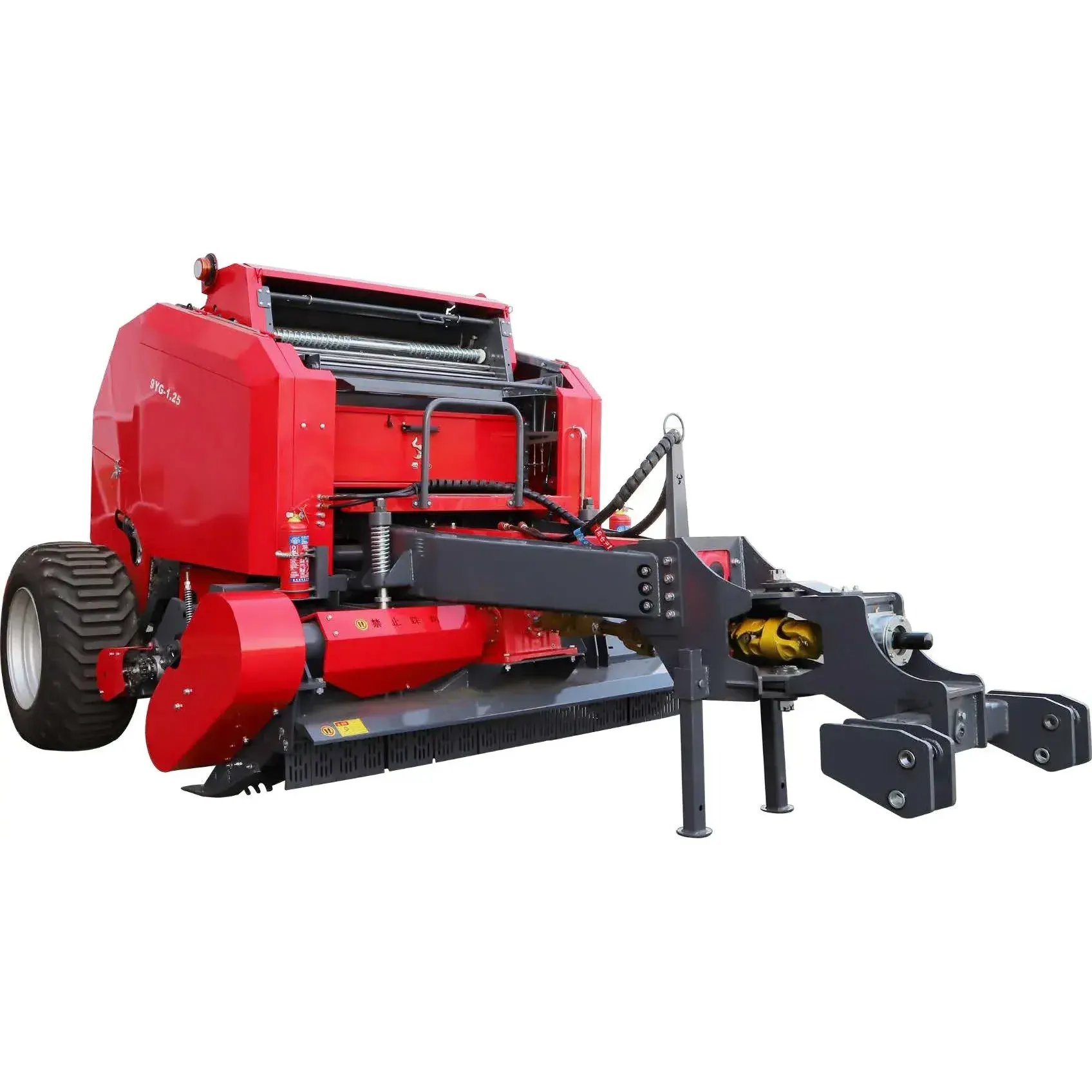
The 9YG-1.25 with hammer-claw pickup. For corn stalk baling in round bale format this is the purpose-built solution — not a modification of a standard model.
Single-Crusher vs Dual-Crusher: Choosing the Right Configuration
The 9YF-2200S is available in two shredder configurations that serve different end-use applications. Understanding which configuration is correct for your operation before ordering will save you the cost of a wrong purchase.
Single-crusher — for biomass and standard feed use
The single-crusher configuration uses one stage of hammer-claw shredding to break down corn stalks before they enter the compression chamber. This produces bales with good density and manageable fibre length suitable for biomass fuel use, standard livestock bedding, and coarse feed applications. The single-crusher is the most common configuration for corn stalk baling in India where the primary end use is biomass or general cattle feeding.
Dual-crusher — for TMR dairy feeding and high-quality silage
The dual-crusher configuration adds a second shredder stage and a negative-pressure dust removal fan. The second shredding stage further reduces fibre length, producing a cleaner, denser bale with lower impurity content. The negative-pressure fan actively removes leaf dust and fine particles from the bale material before compression. This is the configuration required when the end use is TMR (Total Mixed Ration) dairy feeding or high-quality silage production, where feed impurity directly affects palatability and intake.
The price premium of the dual-crusher over the single-crusher is approximately $1,500 to $2,000 FOB. For a dairy operation with 150 or more milking cows where silage quality directly affects milk yield, this premium is typically recovered within one feeding season through improved dry matter intake and feed conversion efficiency.
Field Setup for Corn Stalk Baling
Corn stalk baling requires different field setup and tractor management than paddy straw or wheat straw baling. The following checklist covers the critical setup steps before entering a corn stalk field.
Pre-season checklist for corn stalk baling
- Verify tractor PTO output at 540 rpm — corn stalk shredder mechanisms require consistent PTO speed
- Check hydraulic system capacity — the 9YF-2200S dual-crusher uses more hydraulic demand than the standard 9YF-2200
- Inspect and replace any worn hammer-claw flail arms before the season
- Set shredder ground clearance for the field condition — higher clearance on uneven or cloddy ground
- Verify bale chamber compression pressure settings — corn stalk requires higher compression pressure than paddy straw for equivalent bale density
Optimal tractor speed for corn stalk fields
The optimal tractor speed for corn stalk baling with the 9YF-2200S is typically 3 to 6 km/h — slower than paddy straw baling. Corn stalks require more processing time in the shredder mechanism before entering the compression chamber. Moving too fast causes the pre-compression channel to overfill and the compression mechanism to stall. Start at 3 km/h and increase speed incrementally until the machine is running at capacity without stalling.
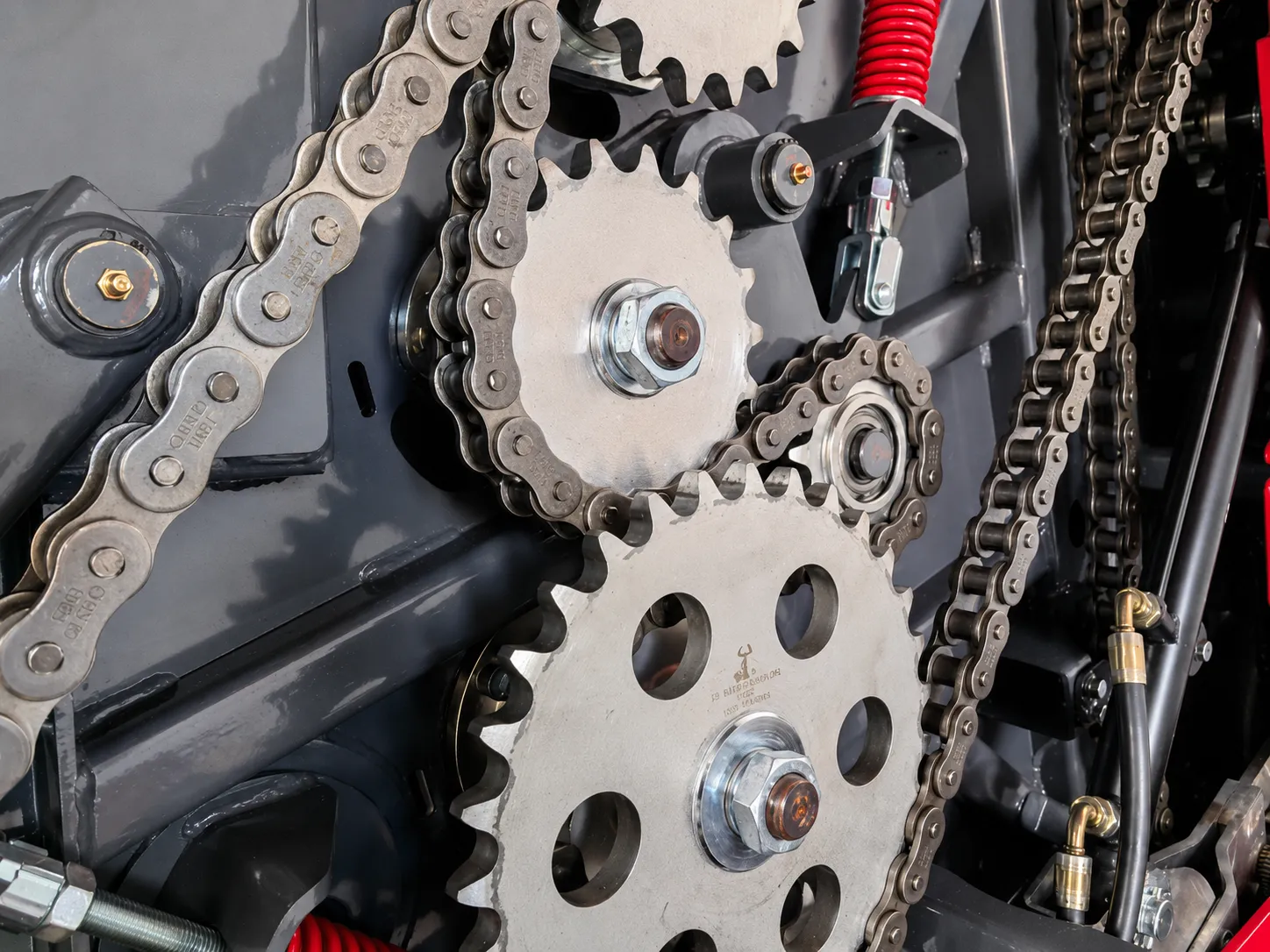
The 20A heavy-duty chain drive on the shredder mechanism. This is a higher-specification chain than the standard drive components on paddy straw balers — confirm this specification when evaluating any corn stalk baler on price alone.
- 9YF-2200S Single-Crusher Corn Stalk Baler — full specifications
- 9YG-1.25 Corn Stalk Round Baler — compact option for corn stover baling
- Tractor Baler Setup Guide — PTO speed, hitch type, and pickup height
- Straw Baler Machine Price Guide 2026 — corn stalk baler prices in context
- How to Choose a Baling Machine Manufacturer — verification guide
Frequently Asked Questions
Can I use a standard 9YF-2200 square baler for corn stalk baling if I run it slowly?
Running a standard spring-tooth square baler slowly on corn stalks reduces (but does not eliminate) the blockage and inconsistency problems. The fundamental issue is that the spring-tooth tine mechanism is not designed to engage standing or partially-standing stalks — speed is not the primary variable. Using the wrong machine slowly still produces inconsistent bale density, accelerated tine and knotter wear, and a higher-than-acceptable rate of stopped-operation incidents in dense corn stalk fields.
What tractor HP is required for the 9YF-2200S single-crusher corn stalk baler?
The 9YF-2200S single-crusher requires a minimum of 100 HP (approximately 74 kW) at the PTO. This is significantly higher than the standard 9YF-2200 requirement of 50 HP, reflecting the additional power demand of the hammer-claw shredder mechanism and the higher compression pressure required for corn stalk bales. Running below 100 HP will cause the shredder to stall on dense corn stalk fields.
What moisture content should corn stalks be at before baling?
The 9YF-2200S single-crusher handles corn stalks at 10 to 23 percent moisture. The dual-crusher variant extends this range to 28 percent moisture. Corn stalks above 28 percent moisture will produce bales that heat in storage and are unsuitable for biomass or long-term feed storage without wrapping. Below 10 percent the stalks become brittle and you lose significant dry matter through the shredder mechanism as fine dust.
Is the 9YG-1.25 corn stalk round baler better than the 9YF-2200S square baler for corn stover?
The choice between round bale and square bale format for corn stover depends on how you store and use the bales. Square bales are easier to stack, measure, and transport by truck — better for biomass fuel operations. Round bales can be stored outdoors without a barn and moved with a round bale handler or tractor spike — better for livestock feed operations. The baling mechanism quality and hammer-claw performance are equivalent between the two models.
Can the 9YF-2200S dual-crusher baler handle paddy straw as well as corn stalks?
The dual-crusher configuration is not recommended for paddy straw or wheat straw. The shredder mechanism over-processes flat, low-profile material — producing excessive fine material and leaf dust loss, and running at higher fuel consumption than a standard spring-tooth baler for no gain in bale quality. If you need to bale both paddy straw and corn stalks, the correct setup is a 9YF-1900 or 9YF-2200 for the paddy straw work and a 9YF-2200S for the corn stalk work.
Tell us your tractor HP, primary crop, and approximate seasonal bale volume. We send a matched model recommendation and factory-direct price — no sales pressure, no intermediary margin.