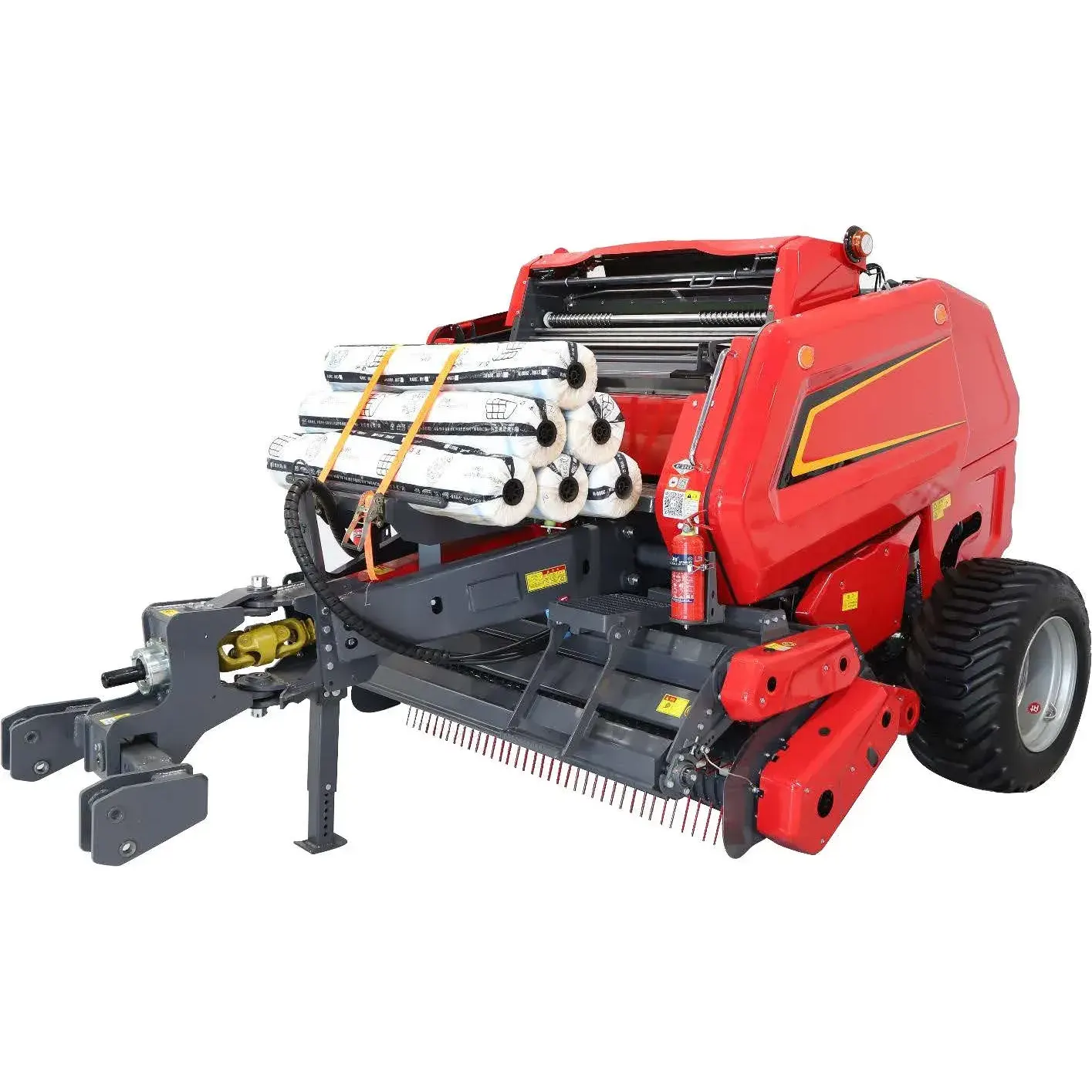
A large round baler in field operation. The square vs round baler decision is one of the most consequential equipment choices for US hay producers — this guide gives you the data to make it clearly.
The hay baler machine choice between square and round format is the single most consequential equipment decision most US hay producers make. It determines how you store your crop, how much labor your operation requires, what your bale value is in the local market, and how much capital you need to invest in complementary handling and storage equipment. Neither format is universally superior — the right choice depends entirely on the specifics of your operation.
This guide uses actual specification data from machines in the Ever-Power range to compare square and round hay baler machines across every relevant dimension: output rate, cost-per-bale, storage efficiency, labor requirement, and crop type compatibility. The goal is to give you a basis for a clear decision rather than a list of generic trade-offs that apply to every farm equally.
The Core Mechanical Difference Between Square and Round Hay Balers
A square hay baler machine uses a reciprocating compression ram that strokes back and forth, accepting a slice of crop material with each forward stroke and compressing it against the previously formed bale material. This means the machine must pause the formation of each new bale while the ram cycles — creating a throughput ceiling that limits maximum output at a given forward speed.
A round hay baler machine uses a continuously rotating chamber that forms the bale incrementally as crop material feeds in through the pickup. There is no pause between bale cycles — the moment one bale is ejected, the chamber begins forming the next one immediately. This fundamental mechanical difference gives round balers a consistent throughput advantage on open fields, particularly at higher forward speeds.
Where square baler output competes
The square baler’s output disadvantage relative to a round baler is most pronounced on large open fields with uniform dense windrows. On small fields with frequent headland turns, rough terrain, or thin windrows that require frequent stops to clear, the output difference narrows considerably. Small square balers also require less tractor HP for equivalent pickup width, which matters for operations with smaller tractors.
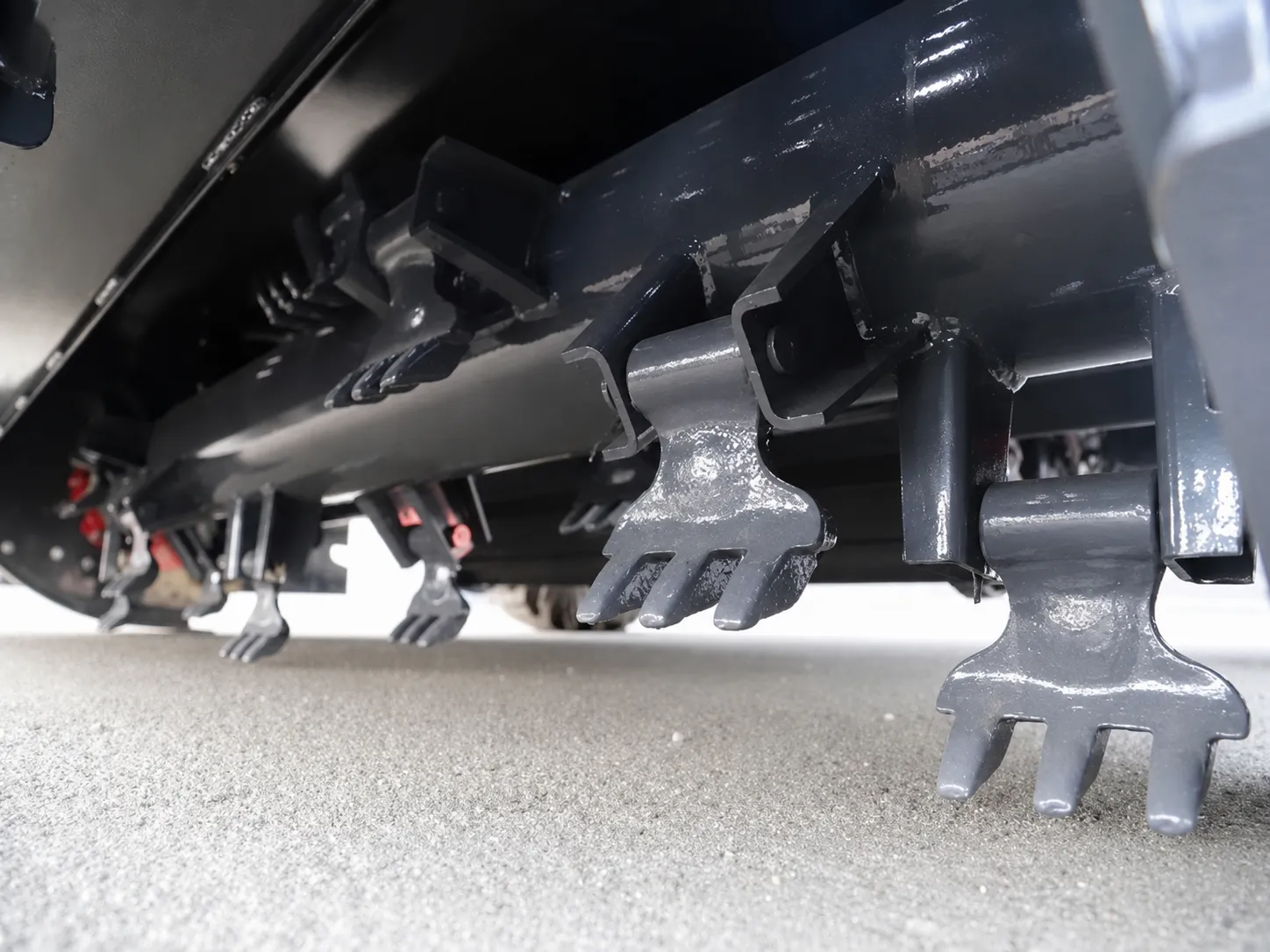
The spring-tooth pickup mechanism feeds the continuous windrow into the pre-compression channel on a square hay baler. The compression ram strokes back and forth — the mechanical source of the square baler’s throughput ceiling.
Output Comparison: Bales Per Hour and Acres Per Day
| Machine | Pickup width | Output (bales/hr) | Acres/day (8 hrs) | Min. HP |
|---|---|---|---|---|
| 9YF-1700 Square | 1700mm | 80 – 120 | 25 – 40 | 40 HP |
| 9YF-1900 Square | 1900mm | 90 – 130 | 30 – 45 | 50 HP |
| 9YF-2200 Square | 2200mm | 100 – 140 | 35 – 55 | 50 HP |
| 9YG-1.0 Round | 1900mm | 30 – 60 bales | 40 – 70 | 65 HP |
| 9YG-2.24D Round | 2240mm | 40 – 100 bales | 50 – 90 | 75 HP |
The output figures require context. Square baler bale count is directly comparable between models — each bale is approximately the same size. Round baler bale count cannot be directly compared to square baler bale count because round bales are significantly larger and heavier. A single round bale from the 9YG-1.0 contains as much material as 15 to 25 small square bales depending on density setting. The fair comparison is tons of forage per hour, not bale count per hour.
Tons per hour: the real output metric
When comparing hay baler machine output in tons of forage per hour, the round baler’s advantage persists but is somewhat narrower than the bale-count comparison suggests. A 9YG-1.0 producing 50 bales per hour at 700 lbs per bale produces approximately 17.5 tons per hour. A 9YF-2200 square baler producing 120 bales per hour at 60 lbs per bale produces approximately 3.6 tons per hour. The large round baler’s throughput advantage per tractor hour is genuine and significant.
Cost-Per-Bale Analysis: Square vs Round Hay Baler Machine
Cost-per-bale is the most useful single metric for comparing hay baler machine economics — but it must be calculated on a per-ton basis to be meaningful, because the bale units are not comparable between square and round format.
| Cost factor | Small square baler | Compact round baler |
|---|---|---|
| Machine purchase (landed US) | $5,500 – $7,500 | $9,500 – $13,500 |
| Twine or net wrap per ton | $1.50 – $2.50 (twine) | $2.50 – $4.00 (net wrap) |
| Labor per ton | Higher (hand stacking) | Lower (loader-tractor handling) |
| Storage infrastructure | Barn required for outdoor use | Not required for outdoor storage |
| Retail bale value | $5 – $8 per bale | $50 – $120 per bale |
| Market channel | Direct retail to horse owners | Wholesale, livestock feed |
For retail hay sales — particularly to horse owners who prefer the small square format — the small square baler commands a per-bale price that on a per-ton basis is frequently higher than round bale wholesale prices. In markets where the premium for small square bales is strong, a square hay baler machine produces better margin per ton of forage even at lower output rates.
The single most important factor in the square vs round decision for US hay producers is not the machine cost or the output rate — it is the local hay market. If your primary buyers are horse owners or feed stores that prefer small squares, buy a square baler. If your primary buyers are cattle operations or dairy farms buying by the ton, a round baler delivers better throughput economics.
Storage and Handling: The Practical Difference
Storage infrastructure is where the square vs round hay baler machine decision has the largest downstream cost implication. Small square bales stack efficiently in a barn — you can store approximately 50 to 80 percent more forage per square foot of barn floor space in square bales than in round bales. If you have an existing hay barn, square bales maximize your storage utilization.
Round bales can be stored outdoors without a barn when net-wrapped — the film sheds rain and limits surface weathering loss to 3 to 5 percent. Square bales stored outdoors without cover lose 15 to 30 percent of dry matter from the surface layer through weathering. For operations without barn storage, round bales are the only viable format for extended outdoor storage.
Handling equipment requirements
Small square bales can be handled by hand for individual movement, and by a bale elevator, bale wagon, or bale chute for bulk barn loading. Round bales require at minimum a loader tractor with a bale spear for individual movement. For farm operations with a single tractor that does multiple jobs, factor in the round bale handling requirement when evaluating the total equipment investment.

A farm operation with round bales in field storage. Round bales stored on well-drained, slightly elevated ground with good air movement around the bale rows lose significantly less dry matter than bales stored on wet ground or tightly clustered.
Which Hay Baler Machine Suits Which Crop
- Retail horse hay — the market expects small square bales
- Alfalfa where leaf retention and presentation matter for price
- Straw — lightweight, stackable, efficient to transport by truck
- Pine straw in the Southeast — standard small bale retail format
- Small fields with frequent turns where round baler output advantage shrinks
- High-yield grass fields where throughput per hour is the priority
- Silage production — film wrapping works better on round format
- Farms without a hay barn — outdoor storage requires round bales
- Large livestock operations buying by the ton rather than individual bale
- Operations with one employee and a loader tractor — reduces labor need
US Market Context: What Farmers Are Choosing in 2026
The US hay baler machine market in 2026 continues to show strong demand for both formats, with round balers dominant in the large commercial hay and silage segments and small square balers holding strong in the retail hay and horse-owner markets. The clearest trend is the growth in compact round balers in the 65 to 90 HP range as small-to-medium farm operations seek to reduce labor dependency without the capital investment of large commercial round baler systems.
Factory-direct purchasing of imported round and square balers has grown as US buyers have become more comfortable with international sourcing through verified manufacturers. CE and ISO certification verification has become a standard buyer expectation rather than a specialist question — a shift that has improved the overall quality of the imported baler market by creating accountability for certification claims.
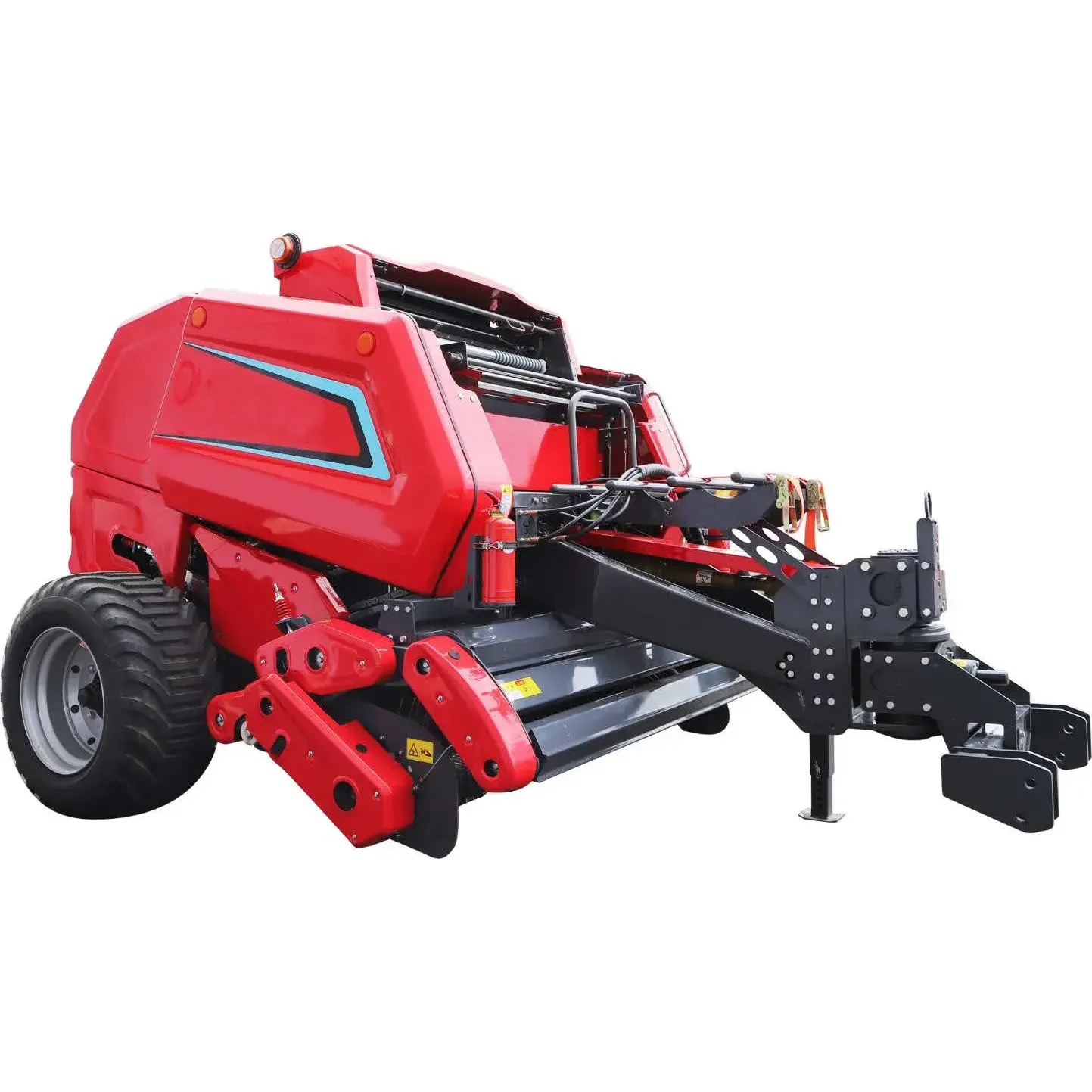
The 9YG-2.24D S9000 at work. For US commercial hay operations requiring maximum throughput per tractor hour, the large round baler remains the highest-output format per dollar of machine investment.
- 9YF-1700 Small Square Baler — full specifications for US hay operations
- 9YF-2200 Large Square Baler — commercial output square baler
- 9YG-1.0 Compact Round Baler — mini round baler for small US farms
- 9YG-2.24D Large Round Baler — commercial hay production machine
- Small Square Baler Buying Guide — what to look for before you buy
Frequently Asked Questions
Is a square or round hay baler machine better for a US hay farm?
It depends on your market and storage infrastructure. For retail hay sales to horse owners, square balers command a per-bale premium that often justifies lower output rates. For large livestock operations or farms without barn storage, round balers deliver better throughput economics and outdoor storage capability. Know your primary buyer before choosing your baler format.
What is the average cost of a hay baler machine in the US in 2026?
Small square baler (factory-direct landed): $5,500 to $7,500. Mid-size square baler: $7,500 to $11,000. Compact round baler: $9,500 to $13,500. Large commercial round baler: $16,500 to $23,000. New from major US brands: add 35 to 60 percent over factory-direct pricing for dealer margin and domestic warranty support.
How long does a hay baler machine typically last?
A well-maintained hay baler machine from a reputable manufacturer runs 10 to 15 seasons before requiring major structural work. Key maintenance factors are knotter lubrication every 8 to 10 hours, drive chain tension checks daily, and pickup tine replacement on condition. Machines run below their minimum HP rating consistently or operated without the lubrication schedule age significantly faster.
Can the same hay baler machine handle both alfalfa and grass hay?
Yes. Both the 9YF square baler range and the 9YG round baler range handle alfalfa, grass hay, orchard grass, bermuda grass, and mixed forage without modification. The main adjustment between crops is the density tension setting (lower for leafy alfalfa, higher for dense grass) and operating speed (slower for alfalfa to reduce leaf shatter).
What is the minimum acreage where buying a hay baler machine makes financial sense?
As a general rule, owning a hay baler machine becomes financially competitive with custom baling from approximately 150 to 200 acres per season. Below this threshold the annual machine cost (purchase price amortized, maintenance, consumables) typically exceeds what you would pay a custom baling contractor. Above 200 acres per season, machine ownership delivers meaningful savings while giving you control over timing — a significant harvest-quality advantage.
Tell us your tractor HP, primary crop, and approximate seasonal bale volume. We send a matched model recommendation and factory-direct price — no sales pressure, no intermediary margin.